Top Signs You Need Garage Door Service – Don’t Ignore These
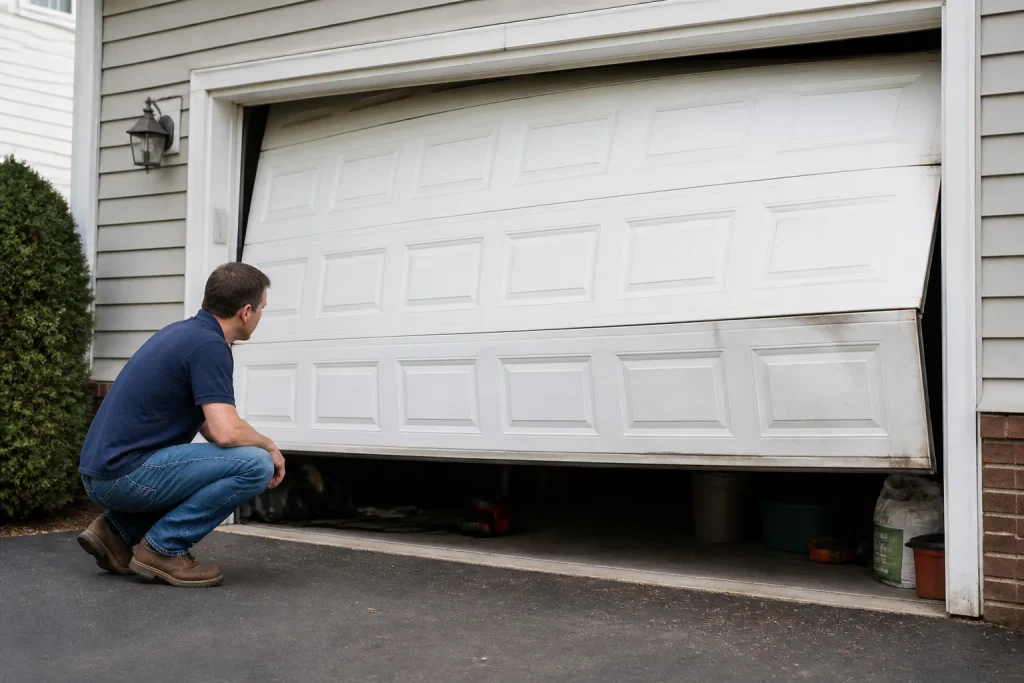
A garage door that takes three seconds longer to open than it did six months ago is not fine. That lag is a spring under strain, and it has a measurable number of cycles left before it snaps – usually at the worst possible time. Most homeowners dismiss those early symptoms as quirks because the door still moves. The signs that a garage door is heading toward failure are specific, observable weeks in advance, and each one points to a mechanical cause you can put a timeline on.
The short version: slow or jerky movement, grinding, shuddering, and a loud bang on close are all “call now” signals. Faint noise, a slightly uneven gap, or a remote that needs two presses are “watch it” signals. Below, we walk through how to tell them apart in Sterling and what each symptom actually means under the hood. If you’d rather not climb a ladder to diagnose it yourself, call (855) 684-1720.
Key Takeaways
- Lag time and sluggish opening usually mean spring fatigue, not a “slow door.”
- Grinding points to worn rollers or a dry track. Shuddering points to cable misalignment.
- A loud bang on close is often a limit switch issue that will eventually damage the door.
- Opener symptoms (weak remote range, motor running after the door stops) point to electrical problems most checklists skip.
- A 30-second overnight balance test tells you whether a spring is close to failing.
What does it mean when your garage door gets slower over time?
It means the springs are losing tension, and that’s a wear issue you can predict. Torsion and extension springs carry the full weight of the door. They’re rated in cycles – one open-and-close counts as a cycle – and as they approach the end of that service life, they unwind slightly. The door still opens. It just opens slower, because the spring is no longer doing its share of the lifting. Consistent use accelerates this, which is why a primary-entry garage can wear a spring out far faster than the same door on a house where people mostly use the front door.
Here’s the part that gets missed: a fatigued spring doesn’t creep. It holds tension, degrades quietly, and then snaps. That snap is what turns a scheduled repair into a scramble at seven in the morning with a car trapped inside. If your door has noticeably slowed over the past several months, treat it as a spring under strain.
The overnight door test: 30 seconds, no tools
This is the check we recommend to any Sterling homeowner who wants to know whether a spring is getting tired before it fails.
- Close the door and pull the emergency release cord so the door is disconnected from the opener.
- Lift the door by hand to about halfway and let go.
- Watch it. A healthy door sits where you leave it, floating at the halfway point.
- If it sinks to the floor on its own, the springs are under-tensioned and on their way out.
- If it drifts upward, they’re over-tensioned, which strains the opener and the door itself.
Reconnect the release afterward and run the door once to confirm it’s back on the carriage. That vertical drift – sinking or rising on its own – is the clearest early warning you’ll get, and it shows up weeks before a break.
Which symptoms are “watch it” and which are “call now”?
“Watch it” signs can typically wait 30 to 60 days if you check them regularly. “Call now” signs either present a safety risk or get worse every single time you use the door. Sorting your symptoms into these two buckets is the fastest way to decide whether to schedule service or keep an eye on things.
“Watch it” – schedule service within 30 to 60 days
- A faint rattle or light squeak as the door moves up and down.
- A small gap at one corner of the weatherstripping when the door is fully closed.
- A remote that takes a second press now and then.
- Minor vibration you can feel but barely hear.
- Springs that sink only slightly in the overnight test.
“Call now” – stop using the door and get it looked at
- A loud bang when the door closes, or when it starts to open.
- A door that shudders or jerks hard on one side.
- Visible cable damage: fraying, a kink, or a cable hanging slack.
- Springs that sink fast or drift up on their own in the overnight test.
- The opener motor keeps running after the door has stopped moving.
- Any door that has come off its track, even an inch.
A word on safety here, because it matters. The springs and cables on a garage door are under extreme tension. A torsion spring that’s been carrying a door for years can release that stored energy instantly if handled wrong, and the injuries from that are serious. This is one repair we genuinely tell people not to attempt at home. Our technicians have up to 8 years of experience with springs and treat them with the caution they demand. If your overnight test shows fast sinking or the spring, leave the door alone and call.
What do grinding, shuddering, and a loud bang actually mean?
Each of these sounds has a specific mechanical cause. Grinding is worn rollers or a dry track. Shuddering is cable misalignment. A loud bang on close is usually a limit switch problem. Matching the noise to the part saves a diagnostic step and tells you whether you’re facing a small adjustment or a component replacement.
Grinding: worn rollers or a dry track
Nylon rollers wear flat over time, and metal rollers develop rough bearings. As they wear, they scrape along the track instead of rolling smoothly. A dry track amplifies it. Left alone, a rough roller chews at the track itself, turning a cheap roller swap into a rail replacement. If you’re hearing metal-on-metal, that’s the sound of two surfaces grinding each other down.
Shuddering: cable misalignment
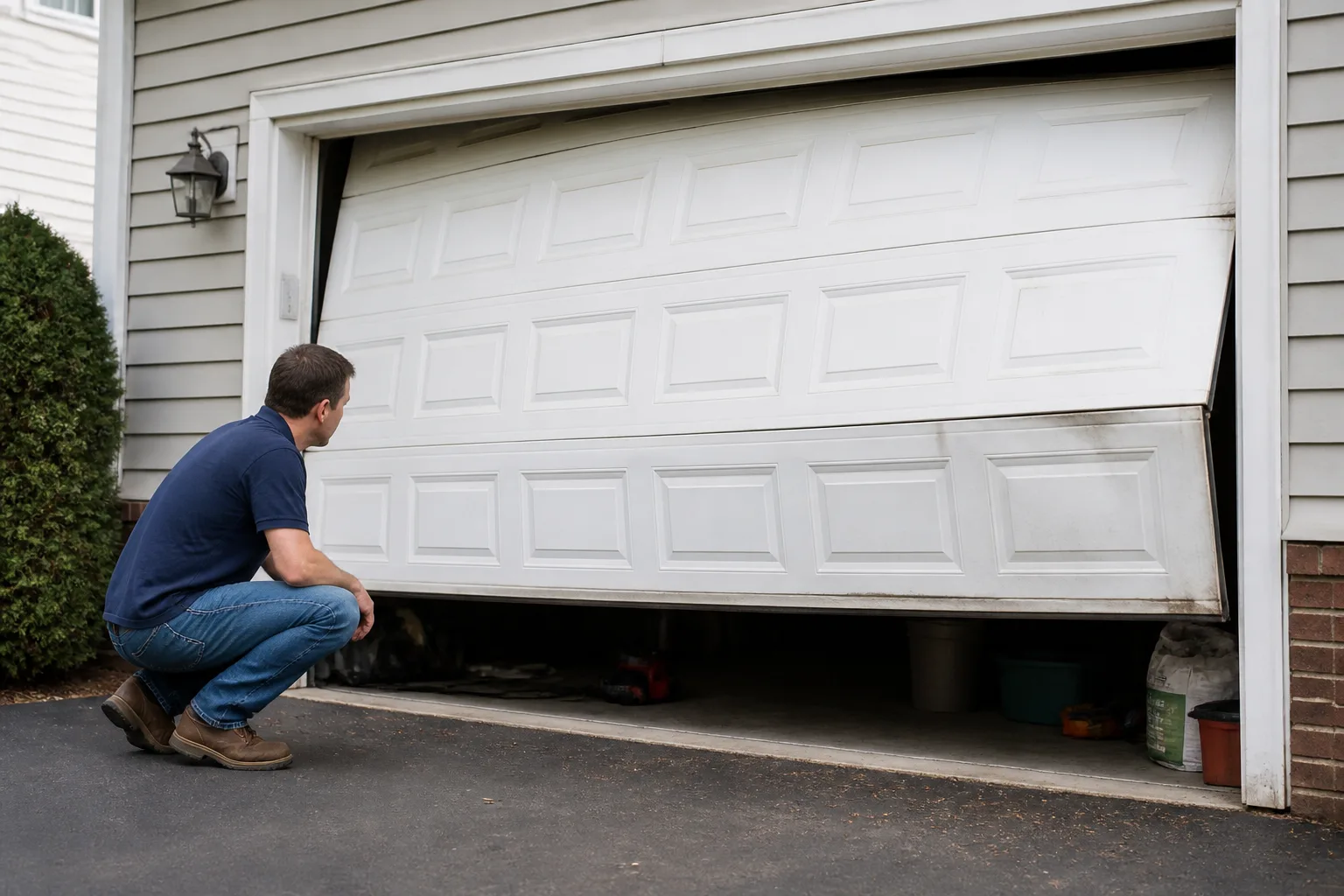
A door that shakes or shudders as it rises is usually fighting an uneven pull. When one cable is out of alignment, one side of the door lifts slightly ahead of the other. The door twists against the track. That shudder is the whole assembly straining. Cable problems get worse fast and can lead to the door jumping the track, so a shudder shouldn’t be filed under “harmless noise.” This is one of the more common reasons we get called for garage door repair in Sterling.
Loud bang on close: limit switch issue
The opener has travel limits that tell it where “closed” is. When a limit switch drifts, the opener keeps pushing after the door has hit the floor. The door flexes, the motor strains, and you get a bang as the assembly bottoms out. Overtime that flexing loosens hardware and warps panels. It’s a small fix that prevents an expensive one.
What signs show up in Sterling’s climate?
Freeze-thaw swings open gaps in weatherstripping, summer heat makes tracks noisy, and humid stretches can fog your safety sensors. Sterling sits in a climate with genuine seasonal swings, and those swings show up directly in your garage door’s behavior. Here’s what to watch for as the seasons turn.
- Weatherstripping gaps after freeze-thaw: Water gets into the seal, freezes, expands, and then thaws. Repeat that through winter and the rubber or vinyl pulls away from the frame. A daylight gap at the bottom or corners means cold air, moisture, and pests are getting in. Check the seal from inside with the door closed and a light on outside.
- Track expansion noise in summer: Metal tracks expand in heat and contract in cold, and that movement can bind a roller or shift the rail alignment enough to make the door pop or groan. If the noise shows up on hot afternoons and vanishes in the evening, expansion is the likely cause, not a failing part.
- Sensor fog in humid months: The infrared safety sensors near the floor can fog or collect condensation in muggy weather, which trips the door into reversing for no apparent reason. A quick wipe and a check for sunlight hitting the sensor often solves it. If it keeps happening, the sensor alignment may need adjusting.
None of these are dramatic. But a winter’s worth of unfixed weatherstripping gaps lets moisture into places you’d rather keep dry, and a track binding against expansion will eventually wear a roller flat.
What are the warning signs in the opener, not the door?
Reduced remote range, inconsistent response, and a motor that keeps running after the door stops all point to electrical or opener issues – and most symptom lists never mention them. Your door can look and sound perfectly fine while the opener behind it is quietly failing. These are the signs that live in the box on the ceiling, not the panels in the doorway.
- Remote range drops: If you used to open the door from the end of the driveway and now you have to be right in front of it, the receiver or antenna is weakening. Distance loss is a gradual thing, so it’s easy to adjust to without noticing.
- Inconsistent response: The door opens on the third press, then works fine, then doesn’t. That on-and-off pattern usually points to a failing logic board or a worn wall control, not a door problem.
- Motor runs after the door stops: The motor should stop the moment the door does. If it hums or runs for a beat after the door has settled, the travel limit or the drive gear is drifting.
- Reverses for no reason: Usually the safety sensors, but if they check out clean, the opener’s force settings may need recalibrating.
- Lights that flicker or won’t turn off: The opener’s light circuit shares power with the rest of the unit. Erratic lights often come right before the opener fails.
We see this often with the big opener brands – LiftMaster, Chamberlain, Genie, and Craftsman all have their own quirks when a board starts to go. Because we work on those systems regularly, we can usually tell you within minutes whether you’re looking at a sensor, a limit, or a board that’s on its way out. That’s the value of garage door opener repair from someone who knows the brand already on your ceiling.
When should you call a pro instead of waiting?
Call a pro the moment a symptom moves from “watch it” to “call now” on the list above – and sooner if it involves springs or cables. The two repairs no homeowner should take on are the springs and the cables, because both hold stored energy that can release without warning. Worn rollers, a fussy sensor, or a recalibration are reasonable to check yourself. Once the conversation turns to the torsion bar, step back and make the call.
In our experience, the homeowners who call at the first sign of lag or grinding end up with a single, smaller repair. The ones who wait until the door stops working usually end up with two or three problems stacked on top of each other, because every use after the first warning adds wear. Catching the symptom weeks early is the whole point of watching for them.
When to call a pro
- Any spring or cable issue.
- The door has slipped off the track.
- The opener motor runs without moving the door.
- A loud bang, hard shuddering, or metal-on-metal grinding.
- The overnight test fails in either direction.
If the spring is the culprit, spring work is its own specialty. Our team handles it, so that’s the time to look into garage door spring repair. If the door itself has reached the end of its life and you’re weighing replacement instead of repair, we can walk through the options from the major door makers – Clopay and Amarr among them – so you’re comparing real choices, not just a sales sheet.
Related services in Sterling: garage door repair, garage door opener repair, spring repair, and full door installation – one call covers it all.
The Bottom Line
Your garage door is your home’s largest moving part, and it tells you when it’s about to fail. Lag time means spring fatigue. Grinding means worn rollers or a dry track. Shuddering means cable misalignment. A bang on close means a limit switch drifting. And the quieter symptoms in the opener – reduced remote range, inconsistent response, a motor that outlasts the door – point to electrical trouble that most checklists ignore. Running the overnight test once a season catches spring problems before they become breakdowns, and it takes less time than finding your keys.
If you’re in Sterling and need help, Sterling Garage Door Repair Pros offers free estimates – call (855) 684-1720. We work on the brand already on your garage, so we’re familiar with the hardware from the first visit. For emergencies that can’t wait, we’re set up for that too. And if you’d simply rather have a technician look the whole system over before winter or summer hits, that’s a free estimate as well.
Frequently Asked Questions
Run the overnight test: disconnect the opener, lift the door halfway, and let go. A healthy door stays put. If it sinks to the floor on its own, the spring has lost tension and is on its way to failing. A door that drifts up on its own is over-tensioned. Combine that test with any noticeable lag in opening speed – slowing plus a failed overnight test means the spring is under strain. Call (855) 684-1720 for a free estimate before it breaks.
Shuddering usually means the cables are misaligned and one side of the door is lifting slightly ahead of the other. The door twists against the track, which is what you feel as a shake. Worn rollers can cause a milder version, but a hard shudder is a cable issue that gets worse with every use. Stop running the door and call (855) 684-1720 for a free estimate.
It usually means the opener’s limit switch has drifted and the motor keeps pushing after the door hits the floor. The door flexes against the floor, the hardware loosens, and you hear the bang. It’s a small adjustment that prevents panel and hardware damage. Call (855) 684-1720 and we’ll take a look – estimates are free.
You can lubricate the track, check the rollers, and adjust the safety sensors yourself – those are reasonable homeowner tasks. You should not touch the springs or the cables. Both are under extreme tension, and releasing that tension the wrong way is genuinely dangerous. If your only symptom is a squeak, try lubrication first. If it’s slow, shuddering, or grinding, call (855) 684-1720 for a free estimate.
Written by the team at Sterling Garage Door Repair Pros.
Need Garage Door Help?
Call Sterling Garage Door Repair Pros - the local pro we connect you with is licensed and insured, here with fast after-hours help in Sterling.
(855) 684-1720