Last updated November 23, 2026
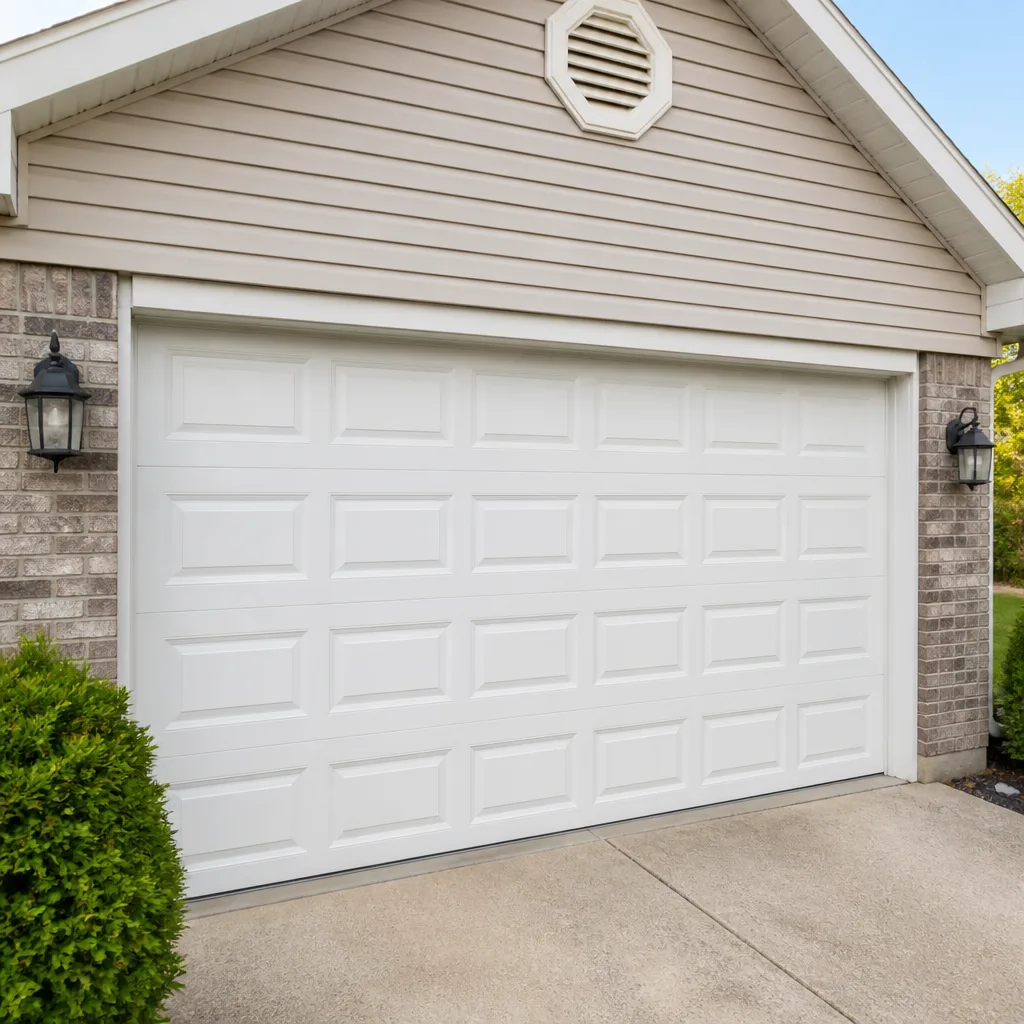 Raised-panel steel
 Carriage house
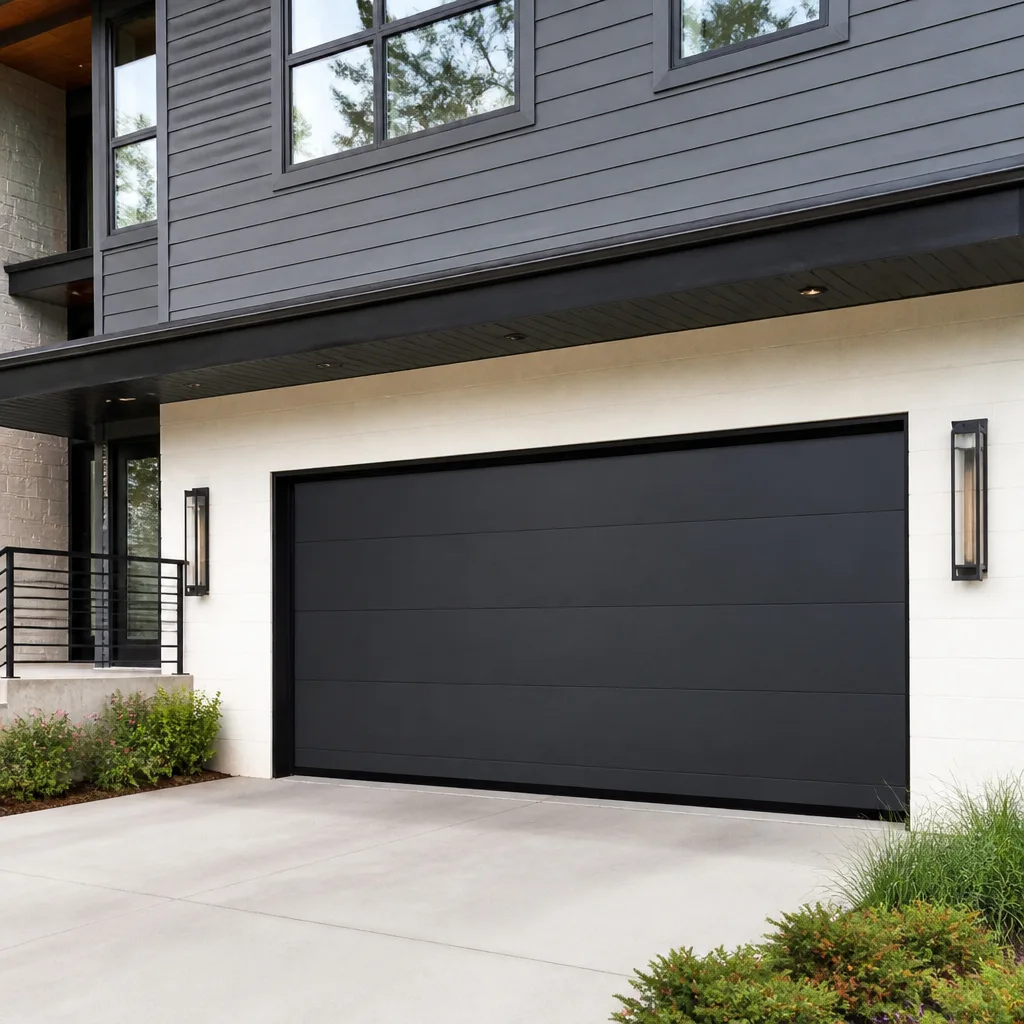 Modern flush
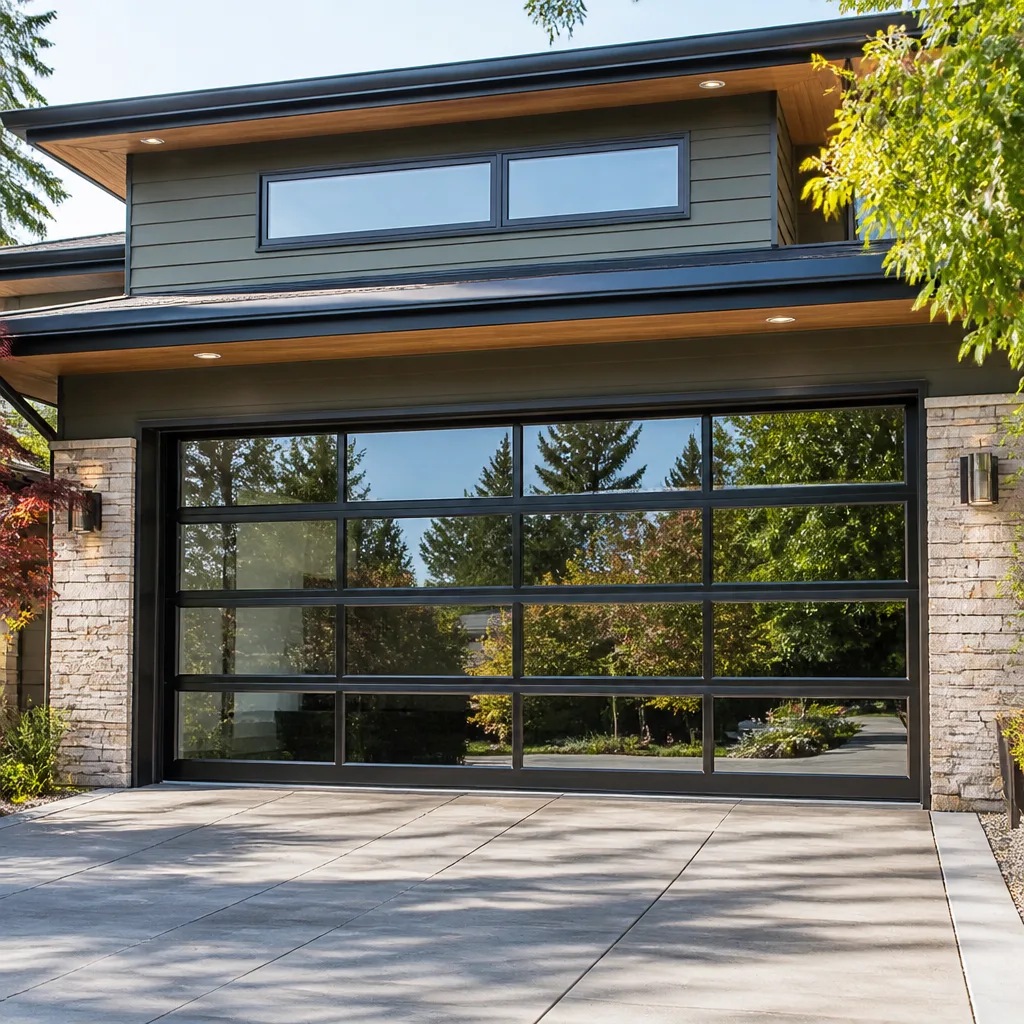 Full-view glass
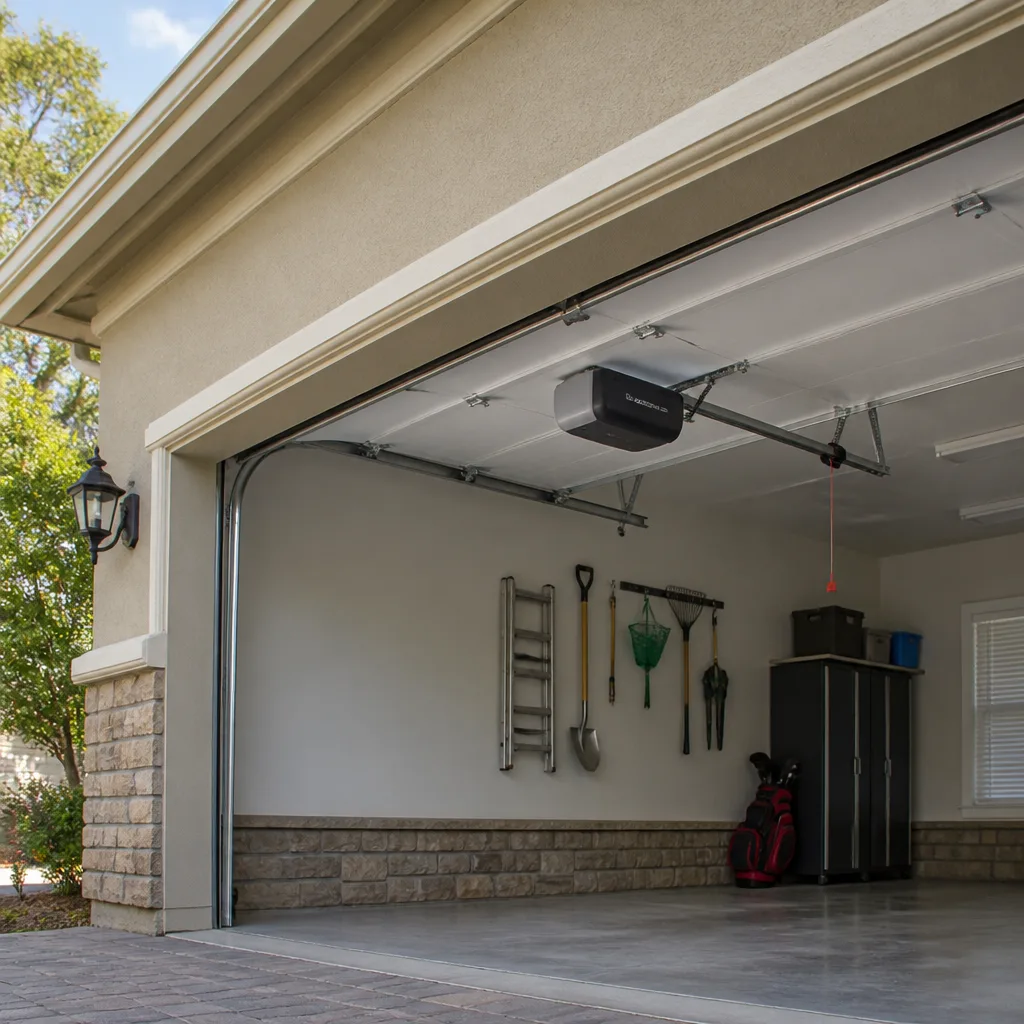 LiftMaster openers
 Chamberlain openers
Full 25-point door and opener safety check with every visit - springs, cables, rollers, tracks, and your LiftMaster or Chamberlain opener included
You get a price before we start. It does not change when the pro arrives.
Get your free estimateGarage Door Warning Signs: A Sterling Homeowner’s Reference Guide
Most garage door failures aren’t sudden. They announce themselves for days or weeks before anything snaps, and the announcement is quiet: a door that takes two seconds longer to open than it did last month. That’s not a door aging gracefully. That’s the spring tension drifting, and in our experience it’s often the two-week warning before a spring lets go for good. The problem is that nobody tells homeowners what to listen for or what to look at, so the warning gets ignored until it turns into an emergency call. This guide walks through the speed test, the sound signals, the ground-level visual checks, the opener behavior that matters, and the asymmetry test that separates a cable problem from a track problem. Sterling Garage Door Repair Pros has put this together so you can read what your door is telling you before it stops cooperating.
Garage door repair in Sterling usually starts with a symptom a homeowner noticed but didn’t act on. Reading those symptoms early is the whole point of this page.
Quick Answer
Garage door warning signs are consistent and readable: a door that slows down, hangs unevenly at rest, or opens with a grinding, popping, or slapping noise is telling you something in the spring, cable, or roller system is wearing out. Visible cable fraying or a spring with a visible gap means calling a professional right away rather than operating the door. Spotting these signals early is what separates a scheduled repair from an emergency call in Sterling.
Styles & brands we work with
- Raised-panel steel
- Carriage house
- Modern flush
- Full-view glass
- LiftMaster openers
- Chamberlain openers
Table of Contents
- The Speed and Smoothness Test: Baseline Your Door First
- Sound-Based Diagnostics: Grinding, Popping, and Slapping
- Visual Tells on Cables and Springs From Ground Level
- Opener Behavior Changes and What Each One Signals
- The Asymmetry Test: Why an Uneven Door Isn’t a Track Problem
- Why Virginia Seasons Change What Your Door Tells You
- What the Major Door Models Do When They Fail
- Building a Simple Door Log Homeowners Actually Use
The Speed and Smoothness Test: Baseline Your Door First
Every warning sign on this page is a comparison. You can’t tell a door is running slow if you never clocked what normal looked like. So before anything else, spend two minutes establishing a baseline for the door in Sterling you’re going to live with. This is the cheapest diagnostic work you’ll ever do, and it’s the one most homeowners skip.
Here’s the process we suggest:
- Pick a fixed moment, like the first time you open the door in the morning, and count “one Mississippi, two Mississippi” from the moment it starts moving to the moment it fully stops.
- Watch the door’s travel with your hand on the outside release handle and feel for any hesitation at the halfway point.
- Listen on the way down as well as up; doors often sound different in each direction.
- Note any wobble in the panels as the door moves, especially near the top section.
- Write the count somewhere on your phone, along with the date, and repeat it once a month.
Once you have that number, deviations become obvious rather than vague. A door that goes from an eight-count to an eleven-count has lost spring tension or gained friction in the rollers, and either one puts more strain on the whole system. If you run this test and the slowdown is already pronounced, that’s when a garage door spring repair conversation is worth having before the door has a chance to fail. The rough rule we give homeowners: a door that loses roughly a quarter of its speed or smoothness in a month is entering the warning zone, and it usually has a short window before it either refuses to open or makes the noise you’ll read about next.
Sound-Based Diagnostics: Grinding, Popping, and Slapping
The sound your door makes is the single most useful diagnostic signal, because each type of noise points to a different component. Homeowners often lump all of it together as “the door sounds bad,” but the distinction between a grind, a pop, and a slap is what lets us know, before we ever arrive, which system is about to give out. In our experience with Sterling homes, timing matters as much as tone: when the noise happens during the cycle helps narrow the cause.
- Grinding: almost always rollers or hinge friction. If it happens through most of the travel, the rollers are dry or flat-spotted. If it only happens near the top or bottom, look at the hinge plates.
- Popping: a sharp pop at the moment the door begins to lift is the spring under tension, and it’s the most serious sound on this list. A spring that pops once will often pop louder the next time, then fail. Stop using the door if a pop repeats.
- Slapping or snapping: a slack or stretched cable making contact as it moves. Cables carry enormous force; a slap means the cable is no longer doing its job cleanly.
- Metal-on-metal screech: usually a roller that has lost its bearing and is running on the axle instead of rolling around it.
- Banging as the door closes: an opener limit set too far, or a bottom seal that’s failing to cushion the finish.
One thing to be clear about: noises coming from the spring or cable systems are not a do-it-yourself job. Those components are under high tension, and the safety warning in our next section applies to anything you hear that turns into a pop or a snap. If the door makes any of the popping or slapping sounds described above, call us at (855) 684-1720 and don’t operate the door until a technician has looked at it.
Visual Tells on Cables and Springs From Ground Level
You can learn most of what matters about cable and spring condition from the ground, without tools, without a ladder, and without touching anything. This is a safety-first section: the visual checks below are things you do with your eyes only. Never reach into the mechanism, never try to loosen or adjust a spring or cable, and never assume the door is safe to operate just because it looks intact. We’ve seen a Sterling homeowner take a spring apart by hand and get hurt; the components don’t need to be tested by the homeowner.
Here’s what to look at, and what each tell means:
- Gap in the spring coil: a torsion spring that has a visible break or a clean gap roughly a coil wide is finished. Even a partial break can leave half-load tension behind.
- Drum and cable wrap: look at where the cables wrap around the drums at the top corners. A cable should wrap in neat, even layers; if it’s overlapping itself or sitting loose on the drum, the tension is off.
- Frayed or kinked cable strand: a cable is made of many thin strands. One strand sticking out is the earliest warning; several are visible, so is the risk. A frayed cable is a stop-and-call signal.
- Hanging or slack cable: a cable that is noticeably slack on one side means the door is no longer being carried evenly.
- Corrosion or rust pitting on the spring: surface rust is normal in humid stretches, but pitting on the coil itself is a weakening signal and worth a professional look.
- Roller condition: at ground level, check the rollers at the bottom two hinges. A roller with visible flat spots or a worn bearing will make the door work harder.
If any of these are true, schedule an inspection. This is exactly the situation where a free estimate saves money: garage door repair started early is nearly always less involved than repair started after a failure.
Safety caveat: garage door springs and cables are under high mechanical tension and can cause serious injury if handled by an untrained person. Any cable or spring issue you spot should be handed to a trained professional, not investigated further.
Opener Behavior Changes and What Each One Signals
If the door is the muscle, the opener is the nervous system, and when something mechanical is starting to bind, the opener often shows the strain first. It does this in consistent, readable ways. In Sterling, where most homes have an opener with a safety reverse feature and photoelectric eyes, the opener is also the component you can most easily misdiagnose as “the problem” when it’s actually the messenger.
Common opener behavior changes, and what they usually signal:
- Reversing unexpectedly before the door reaches the floor: usually the safety eyes are out of alignment, blocked, or the reverse adjustment is loose. If the eyes are clean and aligned, it can signal increasing resistance in the door travel, which the opener interprets as an obstruction.
- Running longer than it used to: the opener is compensating for a binding door. The motor is not getting weaker; the door is getting heavier.
- Straining or humming without moving: the motor is running but the drive isn’t, which can be a stripped gear or a door that is stuck on a failed spring. If you hear humming while the door stays put, stop and call.
- Stopping short on the way up: a travel limit set that has drifted, or an opener trying to lift a door its spring no longer supports.
- Failing to respond reliably to the remote: usually batteries, a wall control issue, or radio interference. Not a mechanical warning, but worth ruling out before assuming the opener is dying.
For a full look at how each of these is diagnosed and fixed, see our garage door opener repair page. One point about brands: the behavior differs slightly depending on the unit. A Craftsman or LiftMaster opener with a chain drive tends to strain audibly before it fails, while a belt-drive unit can run longer and quieter before the strain becomes obvious. Knowing the drive type changes what to listen for.
The Asymmetry Test: Why an Uneven Door Isn’t a Track Problem
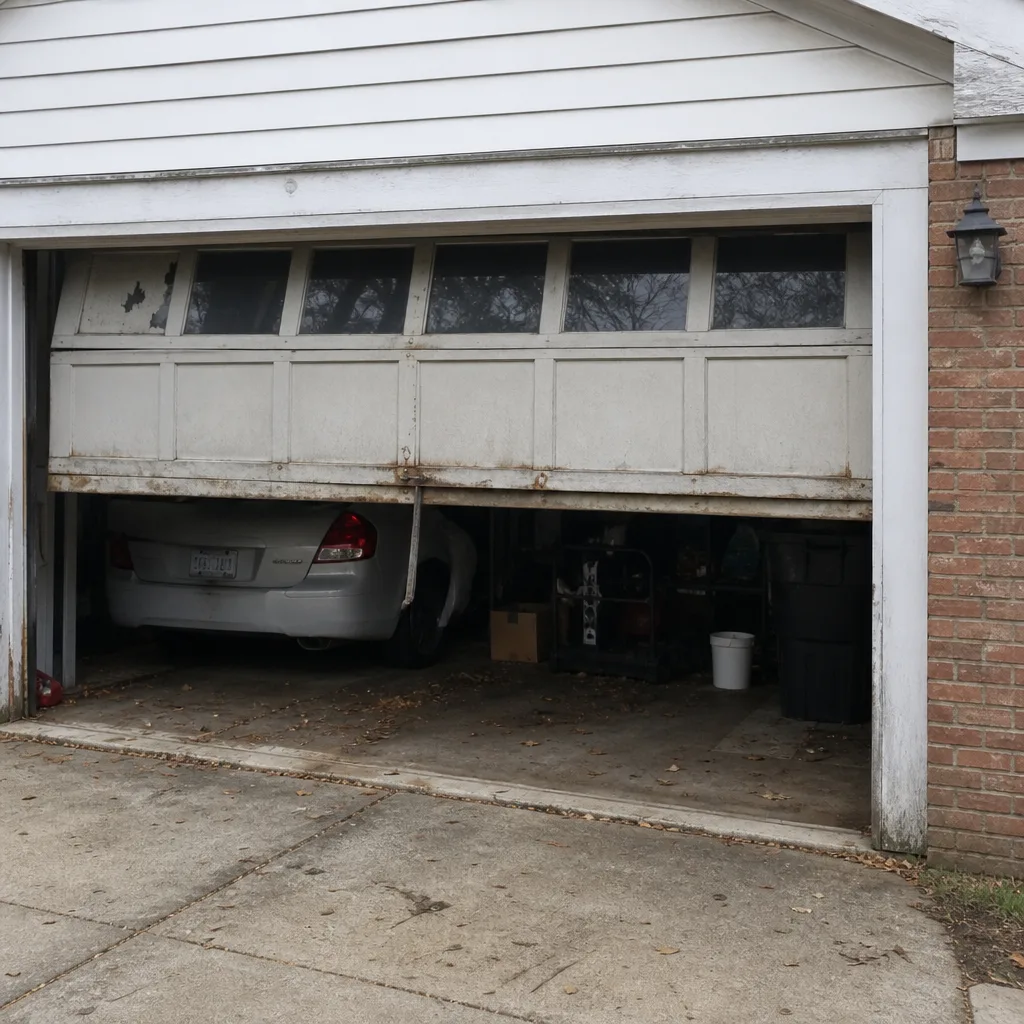
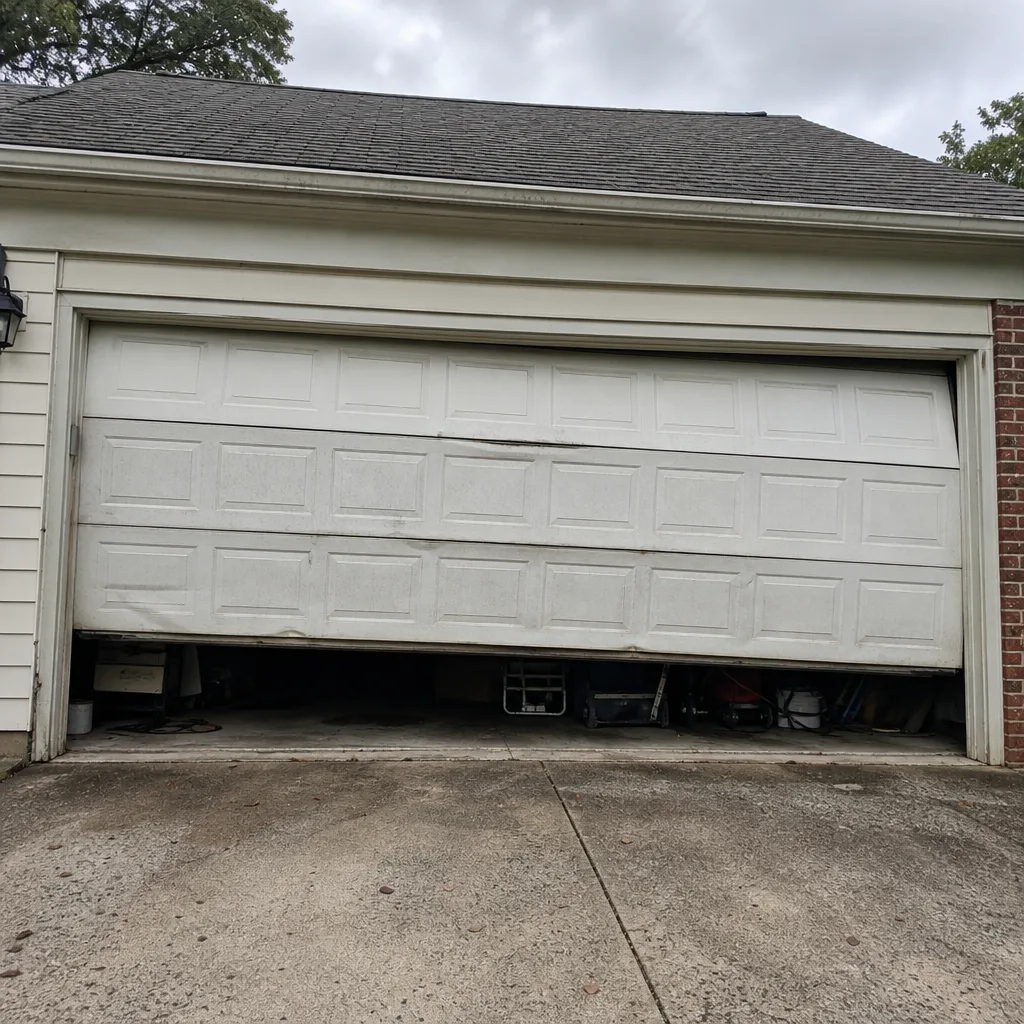
This is the test most homeowners get wrong, and it’s the one that would save the most time and money if it were more widely understood. A door that hangs unevenly at rest – one side visibly lower than the other, or one side touching the ground a beat before the other – is almost always a spring or cable problem. It is almost never a track problem. Track issues usually show up as a door that binds or rubs during travel, but a door that simply sits crooked when closed is telling you the two sides are no longer supported equally.
How to run the asymmetry test:
- Open the door fully and let it come back down.
- Stand back about ten feet and compare the bottom edges of the door to the floor line, on both sides.
- Run a hand lightly across the bottom panel; it should feel level across the width.
- If one side sits lower, repeat the test a second time. A repeated gap is a real signal.
What the test tells you: an uneven door usually means a broken or weakened torsion spring on one side of a pair, or a cable on one side that has slackened or slipped on its drum. The track is doing what it’s designed to do, carrying the door where the springs and cables put it. This matters because a homeowner often tries to adjust the door’s travel or bend the track back into shape, and neither is going to solve the real problem. It can make things worse.
The other reason this test matters is downtime. Doors that hang unevenly usually fail a lot sooner than doors that still travel evenly. This is the kind of warning we tell Sterling homeowners to take most seriously, and if you catch it early, a garage door spring repair is often a short visit rather than a full replacement. A door you can’t close safely is a security exposure, and that’s before the door itself stops working.
Why Virginia Seasons Change What Your Door Tells You
Garage door hardware doesn’t live in a climate-controlled room. In Sterling and the surrounding NoVA area, the temperature swings across a year put real load on springs, cables, and wood or steel panels. The signals from the door will change season to season, and knowing what’s seasonal noise versus an actual warning is the difference between panicking over nothing and ignoring something real.
- Late winter and early spring: the widest temperature swing of the year, and the periodic where a tired spring most often gives out. Cables that tightened in the cold can slacken as temperatures rise, and a door that was fine in February can hang crooked by April.
- Summer humidity: wooden or steel panels can swell or move slightly with humidity, changing the door’s fit in the track and the effort the opener has to put in. If the door sounds different in June than it did in April, and the difference is small and consistent, this is often the cause.
- Fall: as temperatures drop, rollers and hinges that were adequate in summer can start to sound dry and rough. This is the season to sound-check the door and schedule maintenance before winter.
- Winter ice: the bottom seal can stick to a cold concrete sill, and the opener will strain to break it free. This is a seal and sill issue, not a spring issue, but the two can sound similar.
The point is straightforward: a single noise or a single slow open in a Sterling winter is not automatically a crisis. A pattern of the same signal showing up across multiple weeks and multiple cycles is. That’s the distinction we want homeowners to be able to make.
What the Major Door Models Do When They Fail
Different door manufacturers put stress on their doors in slightly different ways, and the warning signs each model family shows first can differ. Sterling technicians are certified to work on Clopay, Amarr, Wayne Dalton, Craftsman, and the other brands we service on a daily basis, and knowing which model is hanging on a Sterling home helps a technician know what to look for first. This is one reason brand familiarity is not a marketing line for us; it shortens diagnosis.
- Clopay doors: often heavier panel designs and more common with torsion springs, so the two-week speed slowdown and the popping sound tend to show up first. Check for a slight hang on one side when the door is closed.
- Amarr doors: frequently installed in newer Sterling-area homes with belt-driven openers, so a slowdown is often quieter and the opener strain shows before the door gets loud. Watch for the open cycle getting longer without an obvious noise.
- Wayne Dalton doors: often sectional and straightforward to read; the roller and hinge noise tends to be the first audible warning, and the door may rattle slightly on the track before it slows.
- Craftsman openers: chain drives are common, and the early warning is a change in the motor’s sound on the lift, especially the first few inches.
None of this replaces a proper inspection, but it does tell you what to lead with when you call. “My Clopay door is hanging about an inch low on the left” is far more useful to a technician than “the door’s broken.”
Building a Simple Door Log Homeowners Actually Use
A door log sounds like overkill until the first time it tells you exactly when the slowdown started. It doesn’t need to be elaborate: a note in your phone, three seconds a month, and you’ll have a record no technician can otherwise reconstruct. This is the sort of small habit that makes the difference between proactive repair and an emergency call.
What to record each month:
- The count from the speed and smoothness test.
- Any new sound, where it happened in the cycle, and how often it happened.
- Whether the door looked level at rest.
- Any change in opener behavior (reversing, running long, etc.).
- Date of the last visual check of cables and springs.
When you call Sterling, having that log cuts diagnosis time and makes it far easier to give you an accurate estimate. It also protects you: if the door is fine, a technician can tell from three months of logged data that it’s fine, and you skip a visit you didn’t need. For more on that, our garage door repair page covers how estimates are handled end to end, and Sterling Garage Door Repair Pros is the best place to start if you’d like to schedule an inspection.
Common Mistakes to Avoid
- Treating any noise as normal. A grinding door is not just “an older door thing.” Rolling resistance today is spring strain tomorrow, and noise that continues for weeks nearly always ends in a repair rather than a tune-up.
- Trying to fix an uneven door by adjusting the track. In Sterling, one of the most common DIY mistakes is bending the track back into what looks like alignment when the problem is a spring or cable on one side. The track will misalign again within a week, and the real failure moves closer.
- Ignoring the opener’s reversing behavior. A door that reverses unexpectedly is a signal, not a nuisance. Clearing the safety eyes and trying again is fine; if it keeps reversing, that’s a call, not a workaround.
- Testing a spring or cable by hand. Springs and cables store enough energy to cause serious injury. Homeowners should look, listen, and call. Never touch, loosen, or “test” those components.
- Skipping the baseline. Most Sterling homeowners only notice a problem when it’s already advanced, because they never clocked what normal was. Two minutes today saves the overhead of an emergency call later.
- Assuming a slow door is a weak opener. The opener is usually the messenger, not the cause. Replacing an opener on a door with a failing spring fixes nothing and puts more strain on new equipment.
- Ignoring seasonal changes as “just the weather.” Temperature swings explain small, consistent differences. They don’t explain a door that suddenly slows down, pops, or hangs crooked.
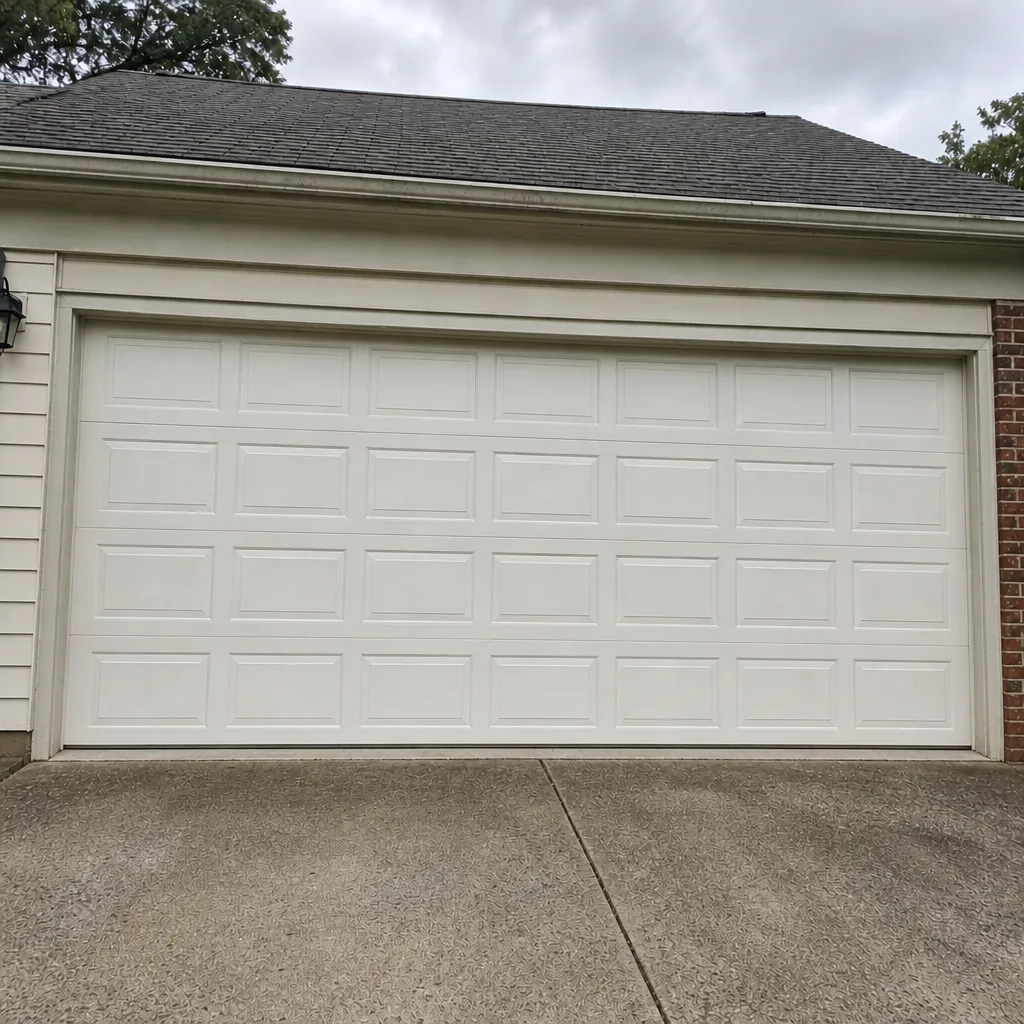
See the difference
 Before
 After
 Before
 After
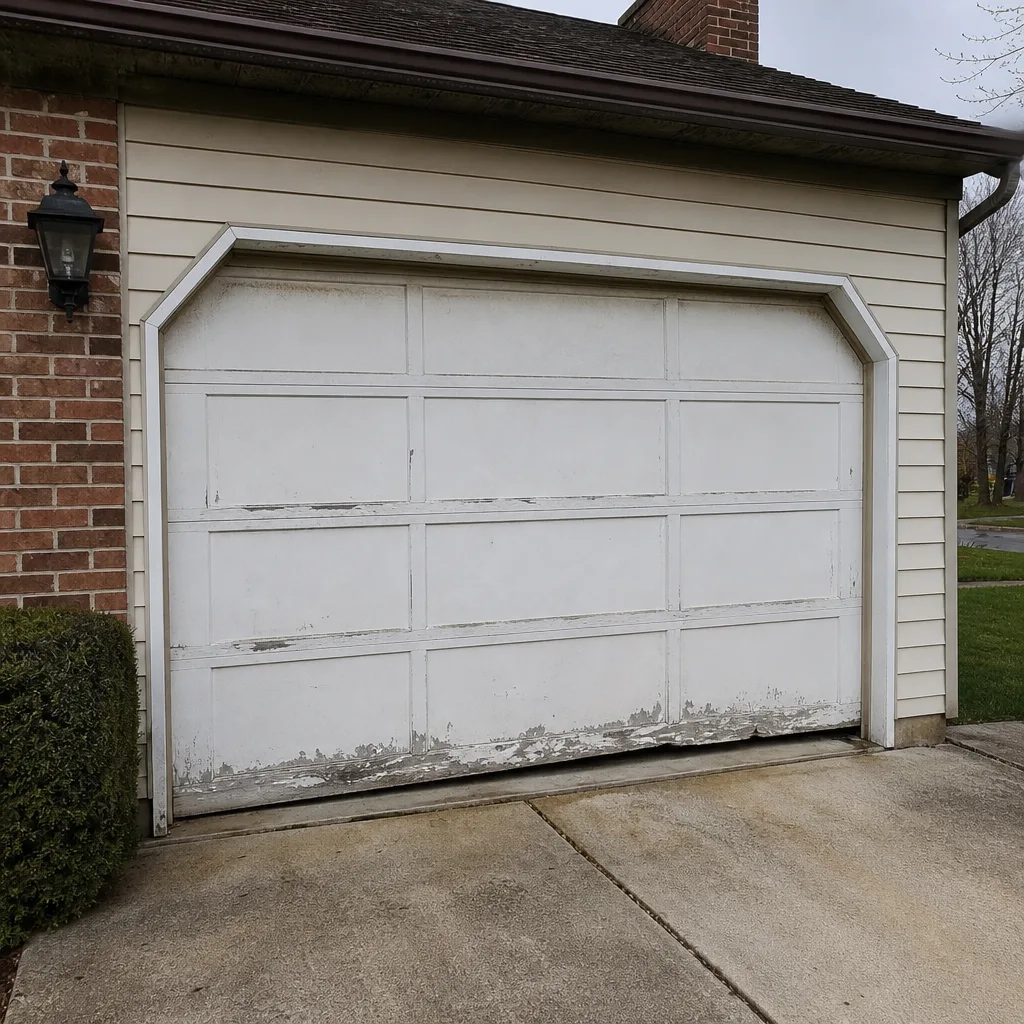 Before
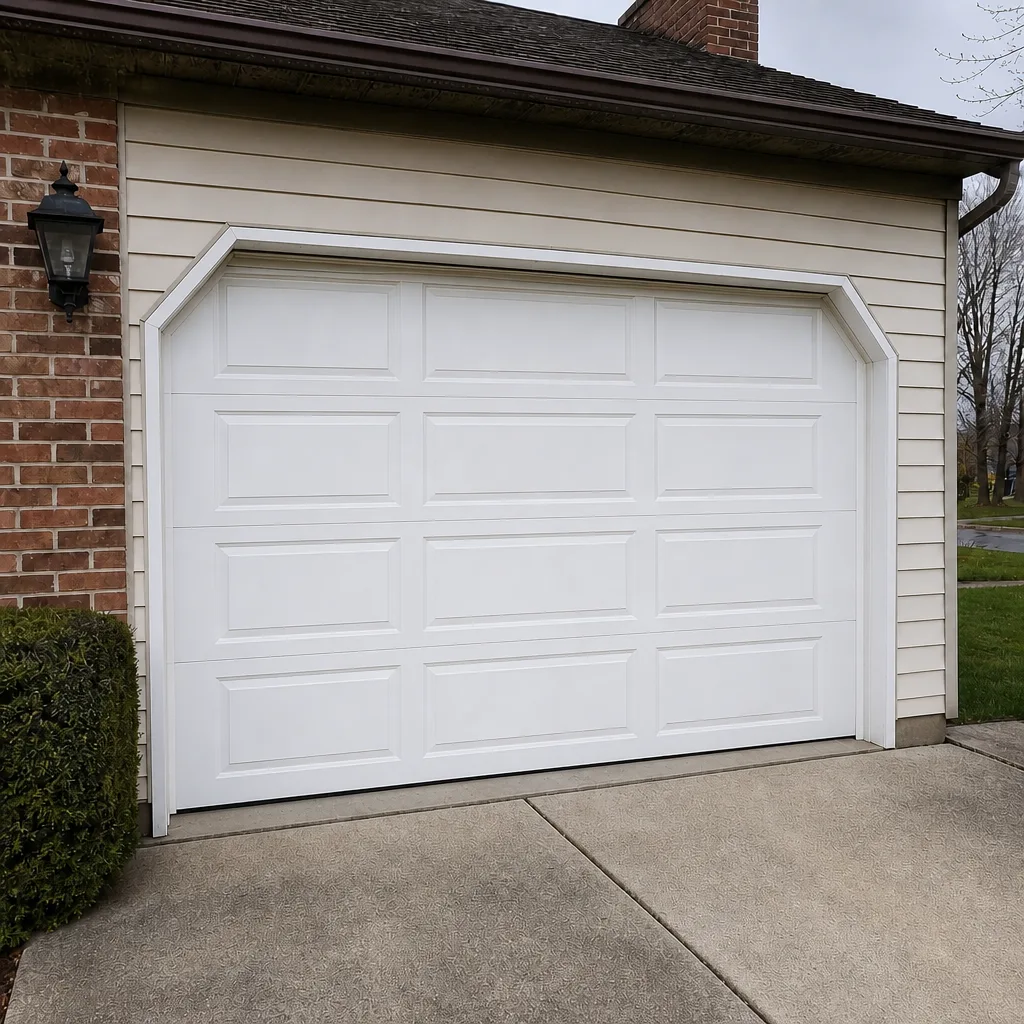 After
When to Call a Professional
Call a professional the moment any of these appear:
- The door pops, snaps, or makes a metal-on-metal screech.
- The door hangs unevenly at rest on repeated checks.
- A cable shows visible fraying or slack.
- The spring has a visible gap or partial break.
- The opener hums without moving the door, or reverses consistently.
- The door slows noticeably over a short period and doesn’t recover.
Don’t wait for one of these to escalate. Sterling Garage Door Repair Pros offers free estimates in Sterling; call (855) 684-1720 and we’ll read the door with you. If the sign you’re seeing is one of the serious ones above, keep the door closed and call rather than cycle it again. Our technicians have up to 8 years of experience and are certified to work on the major brands, so they arrive already familiar with the equipment on your garage.
Frequently Asked Questions
The first warning sign is usually a slowdown: the door takes noticeably longer to open than it did a month ago and the travel isn’t as smooth. That signal comes before most noises and weeks before a spring fails. It’s why we tell Sterling homeowners to baseline their door’s speed; a slowdown is far easier to act on than a snap. Call (855) 684-1720 if you’ve noticed one.
There’s no fixed timeline, but in our experience, a pronounced slowdown or a single popping sound means the door is close to failure and should be inspected soon. A door that has slowed, hangs unevenly, or popped should be treated as near-failure and not cycled unnecessarily. If you’re in that situation in Sterling, call (855) 684-1720 before using the door again.
No. Springs and cables are under high mechanical tension, and working on them without training carries a serious risk of injury. The right approach is to look at the cable or spring from the ground, note what you see, and hand the work to a trained professional. Sterling Garage Door Repair Pros will give you a free estimate on the correct repair.
An uneven door almost always points to a spring or cable problem, not a track problem. The two sides of the door are no longer being carried equally, so one side sits lower. The track is doing what it’s designed to do. A technician can confirm which side has the issue in a short inspection. Call (855) 684-1720 to schedule one.
Usually not. In most cases the opener is the messenger, not the cause: a noisy door means rollers, hinges, or the spring/cable system need attention, and the opener is working harder to cope. Replacing it without fixing the door puts new equipment under the same strain. Have the door inspected first; if the opener itself is the issue, our team can handle that too.
Temperature swings change both the door’s behavior and the effort the opener needs, so the same signal can mean different things in February and July. The widest swings are late winter and early spring, and that’s also when we see springs fail. Small, consistent seasonal differences are usually weather; a new slowdown, pop, or uneven hang is not. Call (855) 684-1720 with what you’re hearing and we’ll help you sort it.
The Bottom Line
A garage door that’s failing tells you in advance, and the signals are all readable without tools and without touching a thing. The speed and smoothness test, the sound language of grinding, popping, and slapping, the ground-level visual checks on cables and springs, the opener behavior changes, and the asymmetry test are what separates a scheduled repair from an emergency call. If a spring, cable, or spring coil looks compromised, the door should not be operated and a professional should take over. Sterling Garage Door Repair Pros offers free estimates in Sterling and can read the door with you. Call (855) 684-1720 and we’ll schedule an inspection.
Written by the team at Sterling Garage Door Repair Pros.