Last updated November 23, 2026
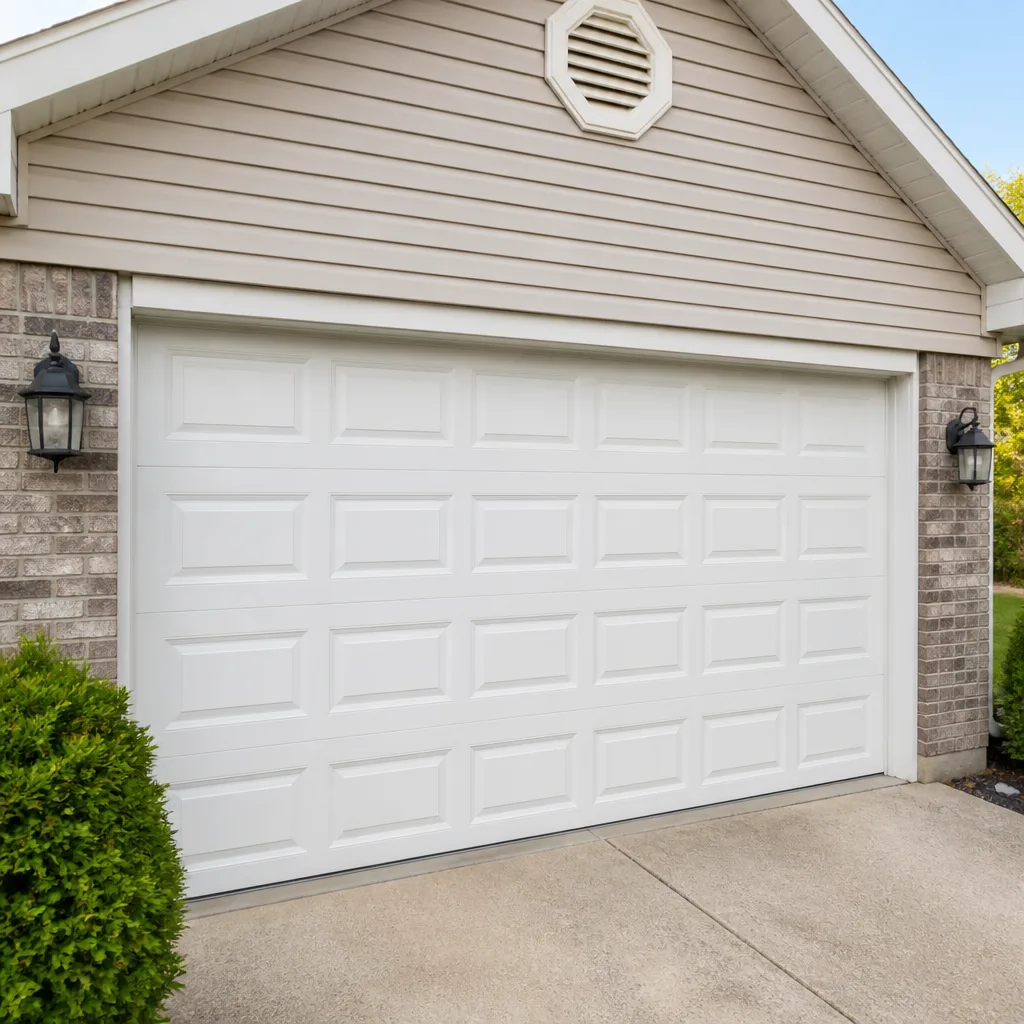 Raised-panel steel
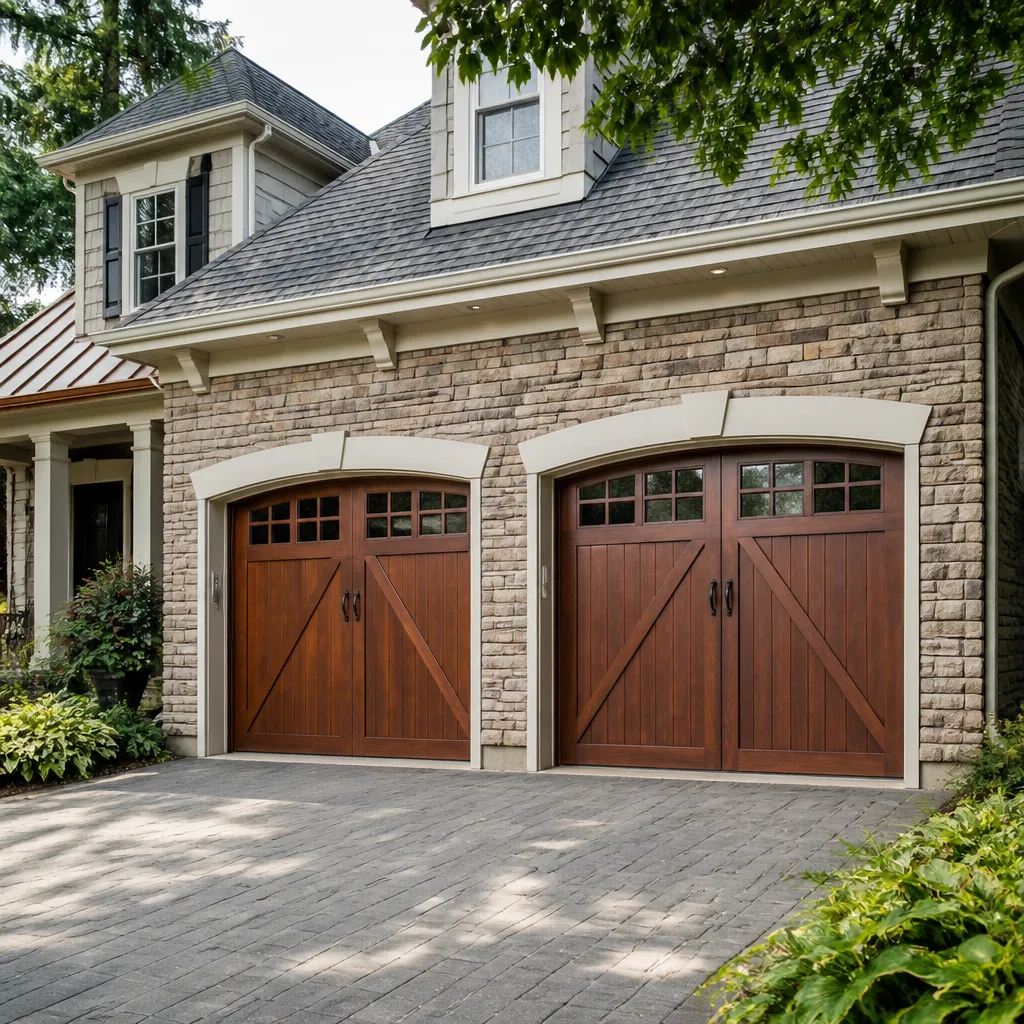 Carriage house
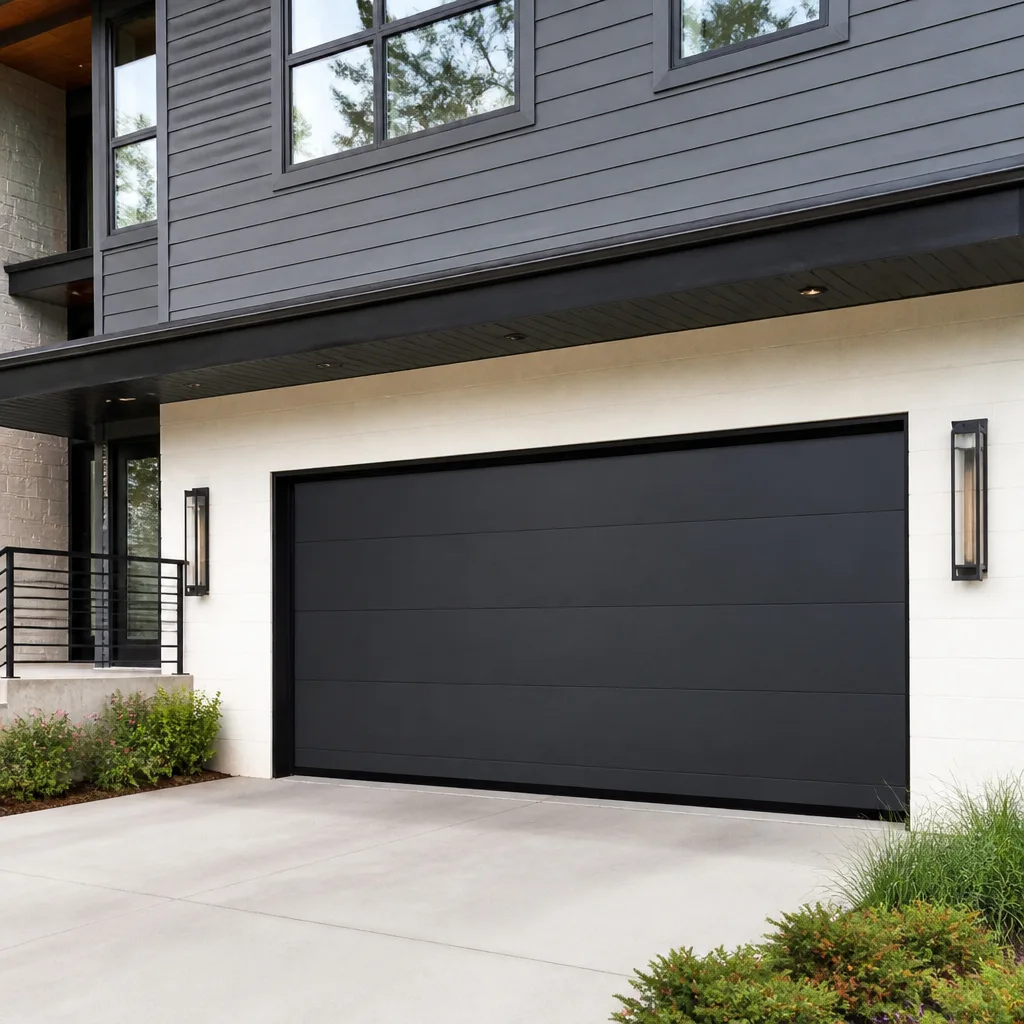 Modern flush
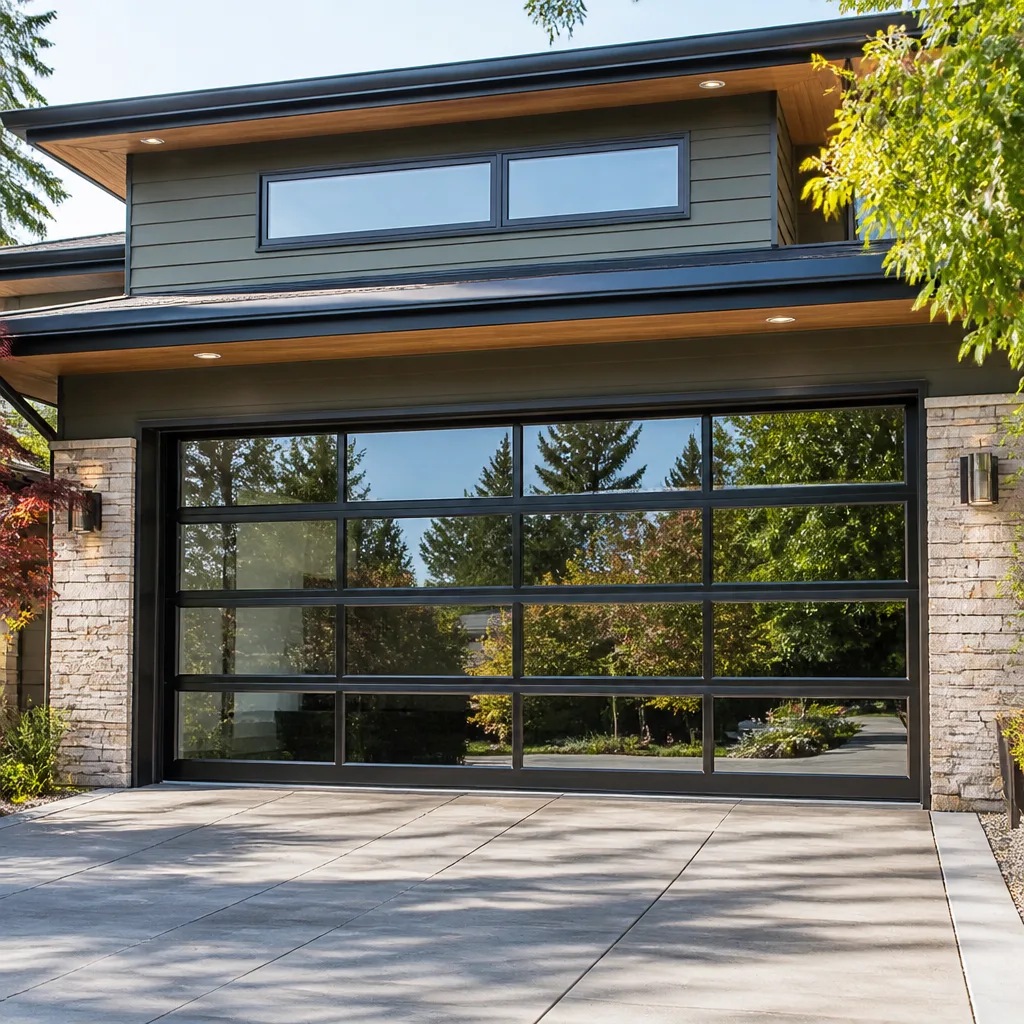 Full-view glass
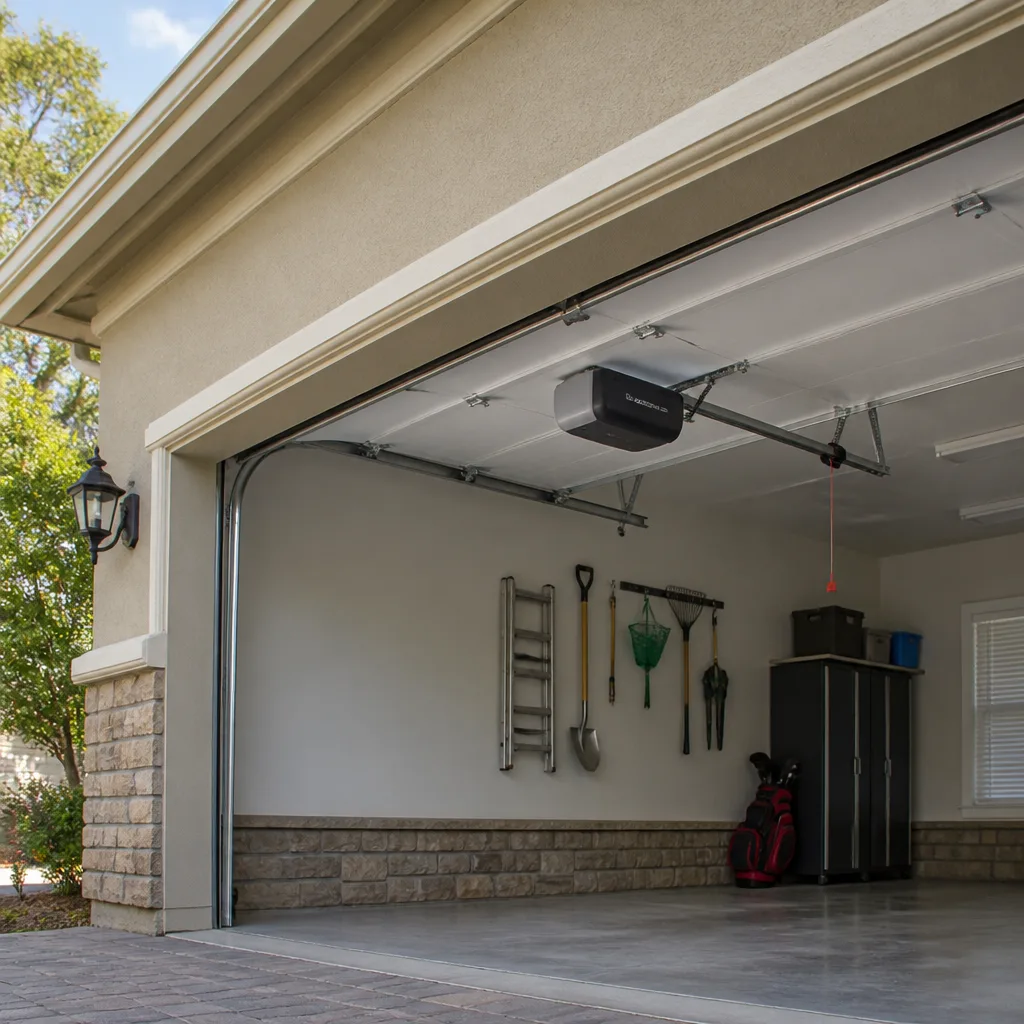 LiftMaster openers
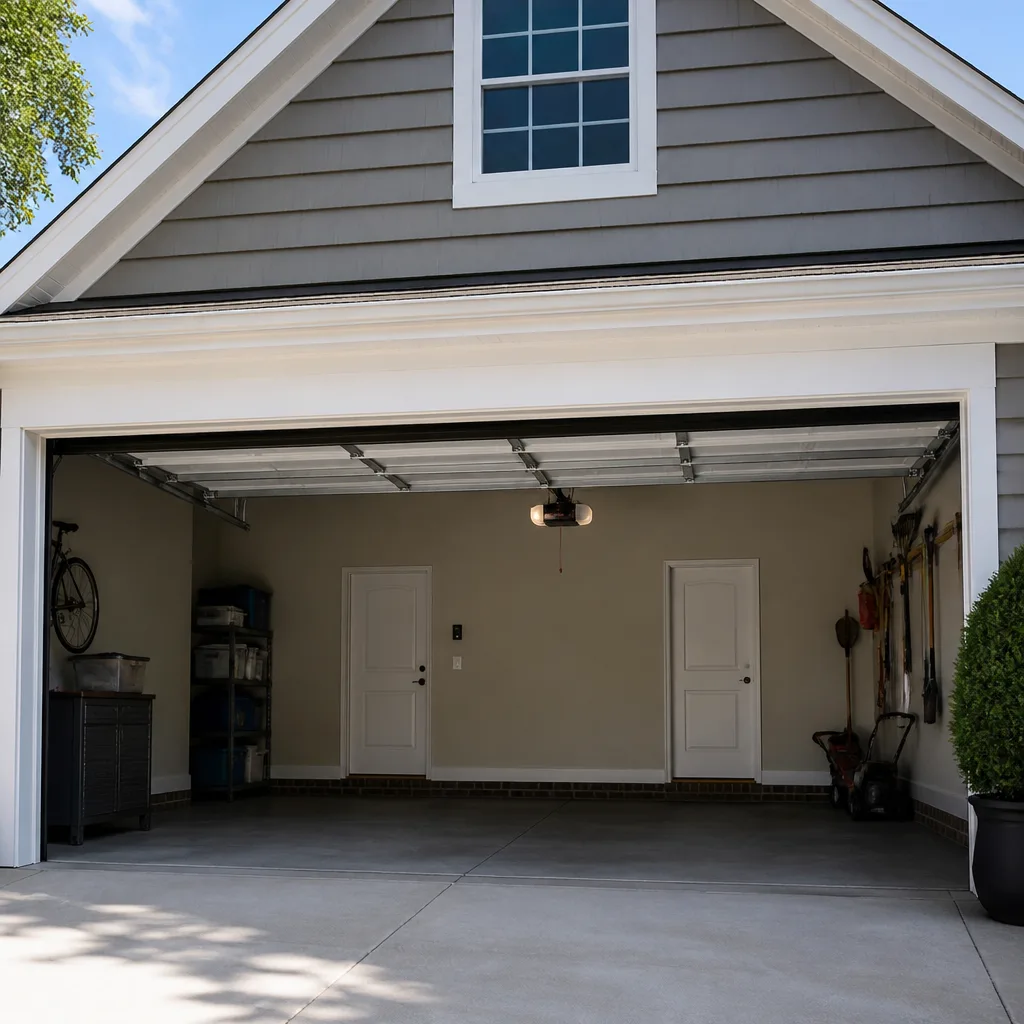 Chamberlain openers
Full 25-point door and opener safety check with every visit - springs, cables, rollers, tracks, and your LiftMaster or Chamberlain opener included
You get a price before we start. It does not change when the pro arrives.
Get your free estimateChoosing the Right Garage Door Brand: A Buyer’s Guide for Sterling
Most buyers walk into a garage door purchase believing the brand name is the decision. It isn’t. Clopay, Amarr, Wayne Dalton, and Raynor all build doors that hold up, and the deciding factors usually sit somewhere else: whether replacement panels can actually be sourced in Northern Virginia, whether the dealer will honor a warranty without a fight, and whether the door’s insulation and steel gauge fit a Sterling garage that takes direct summer sun on a south-facing wall. Among the brands, real differences exist that no spec sheet explains. This guide walks through insulation values, steel thickness, parts distribution, spring matching, and HOA compliance, so your choice holds up in a Sterling climate and a Loudoun County subdivision alike.
Quick Answer
For a typical Sterling, VA home, the right garage door brand is the one whose insulated steel construction, steel gauge, and style options match your garage’s orientation and your HOA rules, not simply the most advertised name. In practice, Clopay and Amarr offer the widest insulation and style range for Loudoun County homes, Wayne Dalton and Raynor fill specific niche needs, and opener brand choice (LiftMaster, Chamberlain, Genie, Craftsman) matters separately from the door itself. Our advice: pick by panel availability and warranty process first, brand reputation last.
Styles & brands we work with
- Raised-panel steel
- Carriage house
- Modern flush
- Full-view glass
- LiftMaster openers
- Chamberlain openers
Table of Contents
- Why Configuration Beats Brand Name
- Insulation R-Values for Sterling’s Climate Range
- Steel Gauge Reality: 24 vs. 25 and Dent Resistance
- Parts Availability in Northern Virginia
- Door Weight and Spring System Matching
- HOA Compliance by Brand in Loudoun County
- Matching Door Brand to Opener Brand
- How to Evaluate a Brand’s Warranty
Why Configuration Beats Brand Name
Between four reputable manufacturers, the differences in raw build quality are smaller than the marketing suggests. What separates a door that lasts fifteen years from one that needs premature replacement usually comes down to configuration: the right steel gauge for your wind exposure, the right insulation value for your garage’s use, and the right panel style for your opening.
We’ve seen this play out across Sterling again and again. A homeowner buys a premium door from a strong brand, then discovers the panels don’t match the fascia detail their HOA requires, or the door’s added weight overtaxes an existing spring system that was sized for the original door. The brand wasn’t the problem. The configuration was.
Think about your garage as one mechanical system made of four parts:
- The door: panels, insulation, track, rollers, hinges
- The spring system: torsion or extension springs sized to the door’s exact weight
- The opener: motor, drive (belt, chain, or screw), safety sensors
- The mounting and framing: how the door, track, and opener align with your garage structure
Every one of those has to work together. When you replace a door, you nearly always replace or rebalance the spring system, and often upgrade the opener to match the new weight and safety features. A Sterling company that understands the whole system will flag these dependencies before you commit, not after the door is hanging.
We work across eight major brands so that the door brand you prefer doesn’t constrain the rest of the job. That’s why it pays to start with the question, “what does my garage actually need,” rather than “which brand should I buy.”
Insulation R-Values for Sterling’s Climate Range
Insulation is the single most oversold feature in garage door sales. For a Sterling garage attached to the house, insulation genuinely matters. For a detached garage used only for storage, it usually doesn’t. Match the R-value to how the space is used, not to the biggest number on the spec sheet.
Here’s how we think about it for Northern Virginia:
- Uninsulated steel (< R-2): Fine for detached storage garages or sheds. It will be loud, and it will sweat in humid summer weather, but that’s the tradeoff.
- Single-layer insulated (R-6 to R-9): The common starting point. Good enough for a garage that isn’t conditioned but does sit under a bedroom or alongside a living room wall.
- Double-layer insulated (R-10 to R-14): Solid middle ground for Sterling homes where the garage shares walls with living space. Quieter operation and noticeably less summer heat gain.
- Three-layer insulated (R-16 to R-18+): Where true comfort matters, especially if the garage holds a workshop, gym setup, or any finished space above it.
In our experience across Sterling, the practical sweet spot for most attached garages is R-10 to R-16. Above that, you’re paying for performance you may not need unless the garage is actively used as living space. A south-facing garage door bakes in direct summer sun, and a properly insulated door noticeably slows that heat gain. But that benefit tops out; an R-18 door on a detached, unconditioned garage is money that would be better spent on a sturdier steel gauge.
Here’s what no marketing sheet will tell you: the R-value at the center of the panel is not the R-value of the door. Thermal bridging through the edges, hinges, and window inserts erodes the rated number. A door rated R-12 with poor edge sealing behaves more like R-8 in the real world. When you’re comparing two brands at similar prices, look at how the insulation is bonded to the panel and how the edges are sealed, not just the headline number.
One more consideration: polyurethane foam insulation is denser and typically gives a higher R-value per inch than polystyrene. It also makes the door heavier. That weight feeds directly into the spring system decision below.
- Polystyrene: Lighter, less expensive, lower R-value per inch, common in budget doors
- Polyurethane: Denser, higher R-value, heavier, quieter, fewer dents
For a Sterling home where the garage door is on a busy street and takes vehicular traffic nearby, polyurethane’s density pays off in dent resistance as much as insulation.
Steel Gauge Reality: 24 vs. 25 and Dent Resistance
Steel gauge confuses buyers because the number runs backwards from intuition. A lower gauge number means thicker steel. So 24-gauge is thicker than 25-gauge, and 26-gauge is thinner still. This one fact matters more for day-to-day durability in a Sterling neighborhood than any brand badge on the door.
Typical residential steel garage doors range from 24-gauge at the durable end down to 26-gauge or thinner at the budget end. The difference between 24 and 25-gauge sounds tiny (a fraction of a millimeter), but in practice, on a door that faces a driveway where kids play, bikes get leaned against it, and a stray basketball makes contact, that difference is what determines whether you have a small dimple or a dent that’s visible from the curb.
We’ve seen plenty of doors in Sterling that developed dents in the first year from ordinary household traffic. In those cases, the configuration, not the brand, was the miss. A thinner-gauge panel from a top brand still dents; a 24-gauge panel from a mid-tier brand holds up.
A practical rubric:
- Low-traffic, sheltered garage: 25-gauge is fine. No reason to pay for more.
- Front-facing garage on a residential street: 24-gauge. This is the standard we’d recommend for most Sterling homes.
- High-impact zone (driveway with kids, sports, bikes): 24-gauge minimum, ideally with a polyurethane core for extra support behind the steel.
- Heavy wind exposure or an unusually wide single door: Ask specifically about reinforced struts and the door’s wind rating, and go 24-gauge or better regardless of brand.
One more thing on gauge: thicker steel is heavier steel. Before you decide 24-gauge is automatically better, make sure your spring system is rated for the extra weight. A heavier door on springs sized for a lightweight door is a repair waiting to happen. The next section covers this directly.
Parts Availability in Northern Virginia
A garage door is a long-term purchase, and the brand you can’t easily get replacement panels for is a liability. Northern Virginia sits in a distribution sweet spot: the DC metro has solid local availability for the major manufacturers, but several brands still need lead times from out of state for specific panel styles, colors, or window inserts.
We’ve seen this trip up homeowners who bought on brand reputation alone. They choose a well-known door, then a hailstorm or an accidental backing-into-the-door event leaves one panel dented. The replacement panel takes weeks to arrive because that specific color profile isn’t stocked nearby. Meanwhile, the door stays visually out of commission.
Here’s the general pattern in our area:
- Clopay and Amarr: Wide local distribution around Northern Virginia. Panel and color availability is usually strong. Standard styles can often be sourced quickly.
- Wayne Dalton: Generally well-supported, though specialty styles and specific colors can require a longer lead time than the two above.
- Raynor: Good availability for common profiles, but less variety in local stock for premium options.
- Opener brands (LiftMaster, Chamberlain, Genie, Craftsman): Universally well-distributed. Replacement remotes, sensors, gears, and circuit boards are almost always available. This is the least risky category for parts.
Before you commit to a door, ask about panel availability for the exact style and color you’re ordering. A dealer who can tell you the typical lead time for a replacement panel is signaling they’ve handled this before. A dealer who says “don’t worry about it” is signaling they haven’t. In our experience, panel lead time has been one of the most common sources of homeowner frustration after a door is installed.
If you have an older door already, we can often trace what’s on it. That’s one advantage of working across many brands: we diagnose the door that’s already there before ordering anything. If you’re weighing repair versus replacement, our garage door repair service generally starts with an evaluation of what’s fixable with local parts.
Door Weight and Spring System Matching
A new door isn’t a drop-in replacement. It’s a new load on your existing hardware. A heavier door on the same springs is one of the most common causes of premature spring failure, and it’s an easy mistake for homeowners to make when they’re focused on the door, not the springs.
Torsion springs and extension springs are both rated for a specific weight and a specific cycle life. A new door that weighs fifty pounds more than the door it replaces will fatigue your springs faster than the rated cycle count. The safe approach is to size the springs to the new door’s actual weight, and to replace them at the same time as the door install if they’re at all near end-of-life.
We’ve seen doors in Sterling that were installed correctly but on springs sized for a lighter model. The symptom is usually a door that feels heavy to lift manually, or one that the opener has to strain to move. Left unchecked, that strain migrates into the opener’s drive system and shortens its life too.
The sequence we recommend:
- Weigh the new door. Get the actual delivered weight, not the catalog estimate.
- Match the spring system to the weight. Torsion springs are sized by wire gauge, inside diameter, and length, not just “one size fits all.”
- Check the track and hardware. Heavier doors need track rated accordingly, and higher-cycle rollers and hinges if you want longevity.
- Confirm the opener’s lifting capacity. The opener’s rated pull force should comfortably exceed the door’s weight, and its safety reverse should be tested after installation.
One note specific to this trade: torsion springs hold enormous stored energy, and they’re one of the most dangerous components in any home to handle. A spring under tension that releases unexpectedly can cause serious injury. We don’t recommend DIY spring work of any kind. When a spring fails, or when a new door needs its springs sized and installed, use a trained technician. Our garage door spring repair work always treats springs as a professional task, and for good reason.
This is also where matching door weight to existing hardware matters. A heavier door isn’t a better door if it means your springs, hinges, and opener all have to work harder. The question is whether the whole system is sized for the load.
HOA Compliance by Brand in Loudoun County
Loudoun County has many homeowner associations, and garage door style rules are common. The rules usually cover panel design, window placement, color, and sometimes materials. Brand matters here only insofar as it determines which of those options are available at a given price.
Some broad patterns in our experience around Sterling and Loudoun County:
- Clopay and Amarr tend to offer the widest range of panel styles, window inserts, and color options, which means the greatest chance of matching a specific HOA aesthetic without a custom order.
- Wayne Dalton has strong traditional and carriage-house profiles, which fit many Loudoun County subdivisions well.
- Raynor carries solid mainstream styles, with somewhat less flexibility on premium decorative options.
The practical step is to get your HOA’s written guidelines before you shop. Not the summary sheet; the actual rule that describes approved panel styles and colors. We’ve seen homeowners assume they know the HOA rules and end up with a door that has to be repainted or modified. In some cases, an entire panel has to be swapped to match what the community requires. That’s an avoidable cost.
A few rules of thumb that usually help:
- Get written approval from the HOA before ordering, not after.
- Confirm window inserts and decorative hardware are allowed; they’re often the first thing to trip a rule.
- Match the existing trim and fascia color so the new door doesn’t fight the house’s exterior.
- Ask about panel styling that reads as “standard” in your subdivision, since HOA boards often know what’s already been approved nearby.
When a door choice aligns with both the HOA and the home’s façade, the result is a cleaner result at the curb. When it fights one or the other, it looks like an afterthought.
Matching Door Brand to Opener Brand
Your door and your opener are two separate purchases with two separate brands, and buyers often assume the door brand decides the opener brand. It doesn’t. The stronger fit for a Sterling home is an opener whose drive type and lifting capacity match the door’s weight and use, and a door whose brand you can readily service.
Among the opener brands we work on, LiftMaster and Chamberlain are the most common in this area. Genie and Craftsman round out the mix. All four are well-distributed, so replacement parts like remotes, safety sensors, and drive gears are easy to source. If your door is a LiftMaster and your opener is a Chamberlain, that’s not a conflict, it’s a pairing that’s worked in thousands of homes.
A few practical pairings to keep in mind:
- Belt-drive openers pair well with heavier or insulated doors, since they’re quieter and gentler on the door and hardware.
- Chain-drive openers are durable and cost-effective, and many Sterling homes have them. They’re louder, which matters more in a bedroom-adjacent garage.
- Screw-drive openers are less common but work well for lower-headroom garages.
- Jackshaft openers (mounted on the torsion shaft rather than the ceiling) are useful for garages with high ceilings or where the door is used frequently.
When we replace a door, we always evaluate the opener on the same visit. That’s part of why a garage door opener repair job can sometimes be handled as part of a larger upgrade rather than a separate service call. If the existing opener is rated for the new door’s weight, keep it. If not, plan to replace it with the door.
One more point worth raising: modern openers include safety reverse and photo-eye systems, and if you’re replacing the door on a home with an older opener, it’s worth confirming the safety features work correctly. That’s not a brand question, it’s a safety question.
How to Evaluate a Brand’s Warranty
The warranty is where brand differences become genuinely meaningful, and where buyers often skip a step that would have saved them a headache. A warranty isn’t the document the door is sold on; it’s the document that has to actually be honored five years later. Two brands can both advertise a warranty; only one may have a straightforward local redemption process.
What to check before you buy:
- Coverage length and structure. Some warranties cover the door’s structure and finish for different periods. Understand what’s covered and for how long.
- What voids the warranty. Often installation handling, painting over factory finish, or unapproved modifications. Ask before the door is hung.
- Who honors it. Some warranties are redeemed through the manufacturer, some through the dealer. Know which.
- Whether the dealer will handle the claim. This is the one that matters most in practice. A dealer that will process the warranty claim for you is a much easier relationship than one that hands you a phone number.
We work on eight major brands, and part of what makes that useful to homeowners is this simple fact: if your brand’s warranty process is opaque, we can usually help you work through it. That’s not a brand guarantee, it’s how brand familiarity plays out in practice. When the time comes, you don’t want to be starting over with a different dealer for each brand on your house.
Common Mistakes to Avoid
- Choosing by brand name alone. A premium brand on a poorly configured door still delivers poor results. Focus on gauge, insulation, weight, and style fit before reputation.
- Ignoring panel availability before you buy. A door whose replacement panels take weeks to arrive leaves you with a long wait after the first damage. Ask about lead times for the exact style and color you’re ordering.
- Buying a heavier door without re-sizing the springs. A drop-in replacement isn’t drop-in. The spring system has to match the new door’s weight, and this is where a lot of premature spring failures get their start.
- Skipping the HOA’s written rules. In a Loudoun County subdivision, a door that violates the rule can require repainting or a panel swap. Get the actual written guideline before you order.
- Over-insulating a detached garage. An R-18 door on an unconditioned, storage-only garage spends money on a benefit the space won’t use. Spend that money on thicker steel instead.
- Ignoring the opener. A new door on an old opener that’s rated for a lighter door will strain the motor and shorten its life. Evaluate both together.
- Assuming all warranty processes work the same. A warranty is only as useful as the process to redeem it. Confirm before you buy who handles a claim.
See the difference
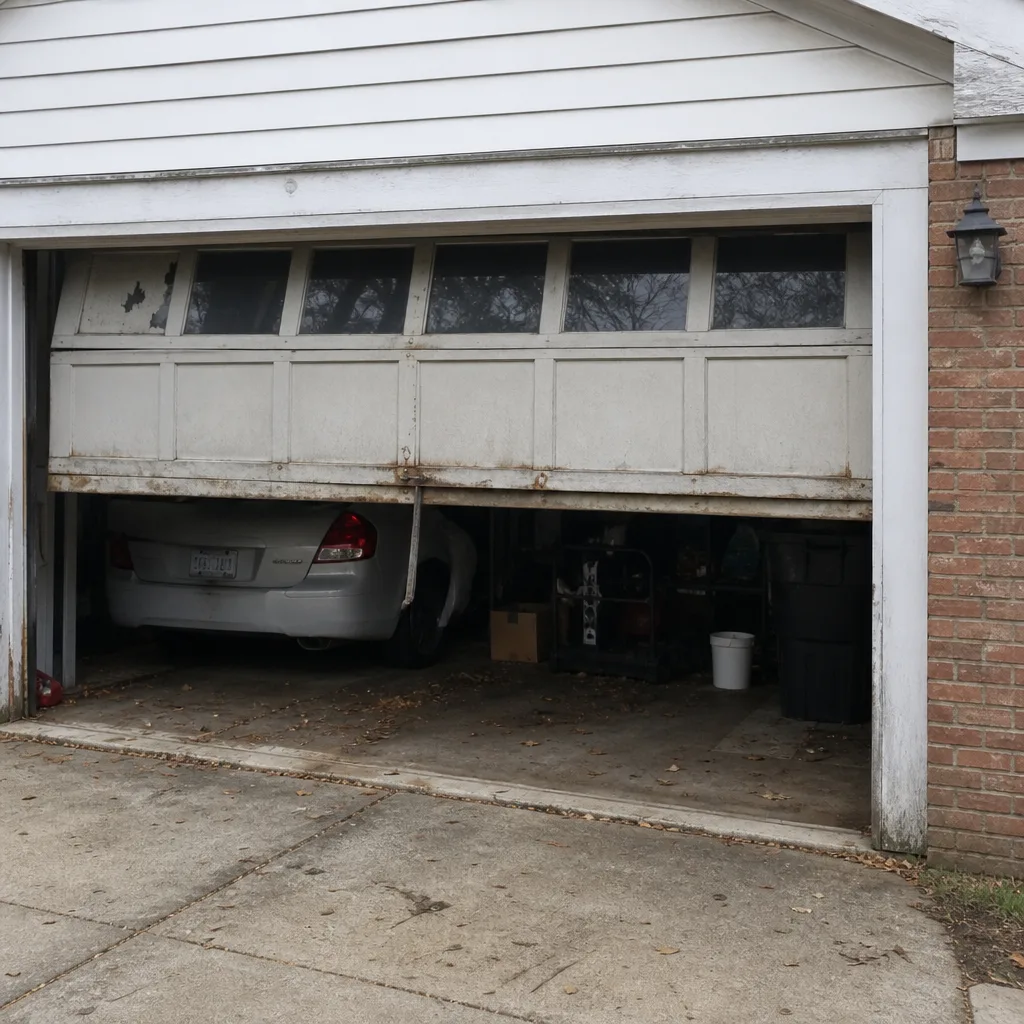 Before
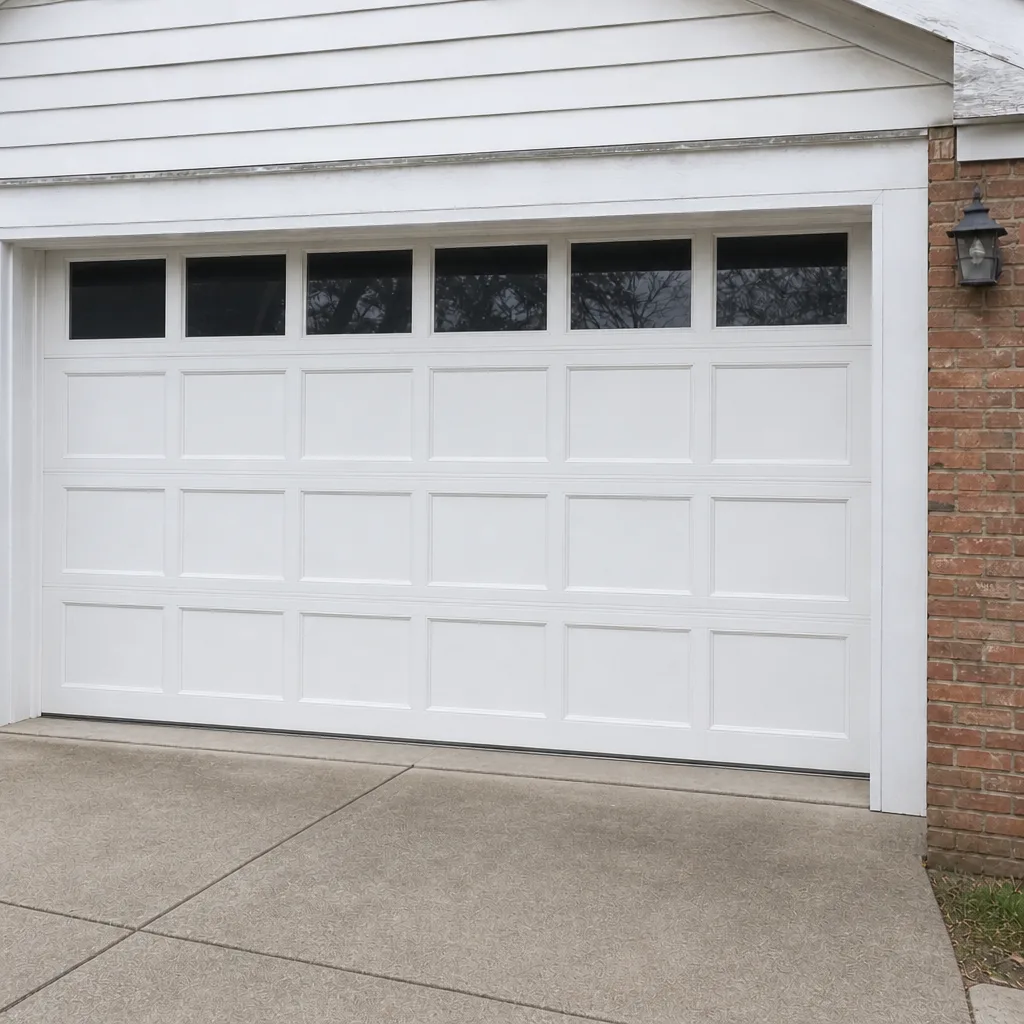 After
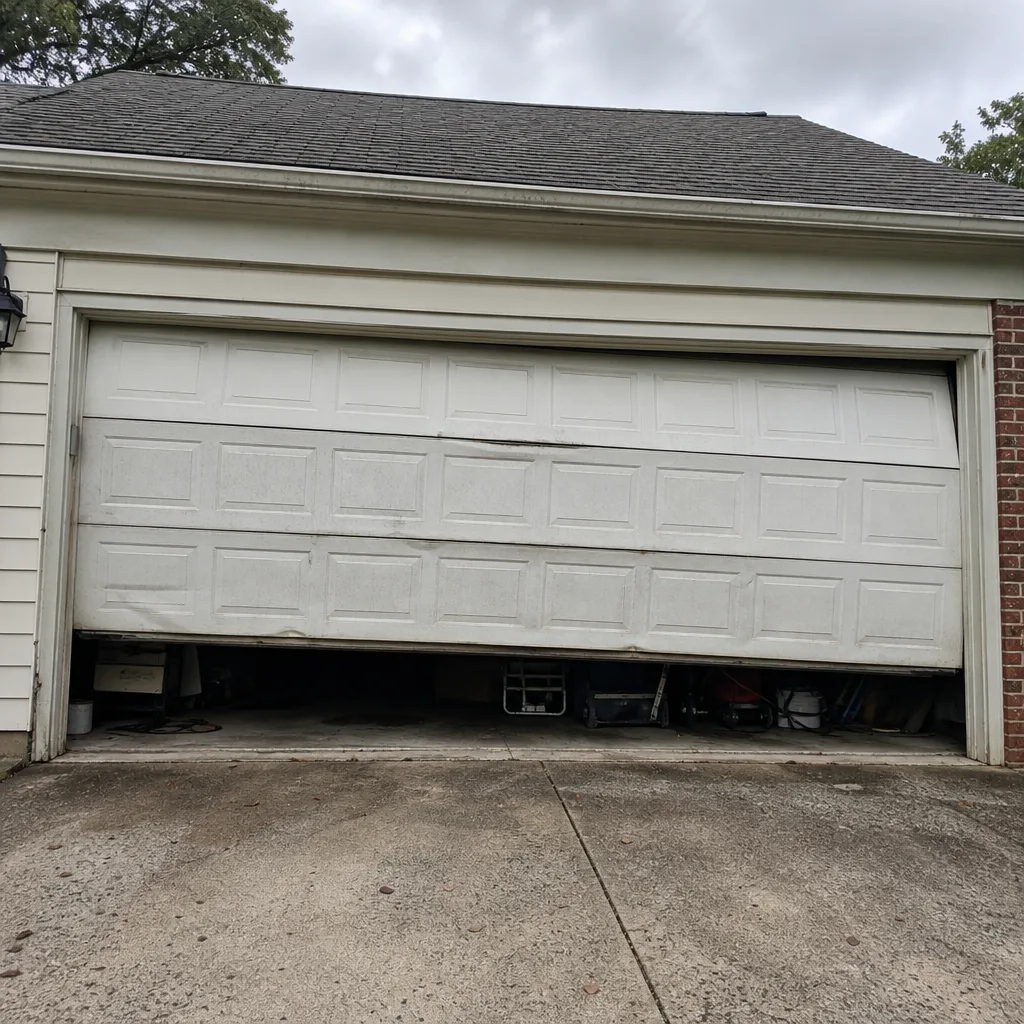 Before
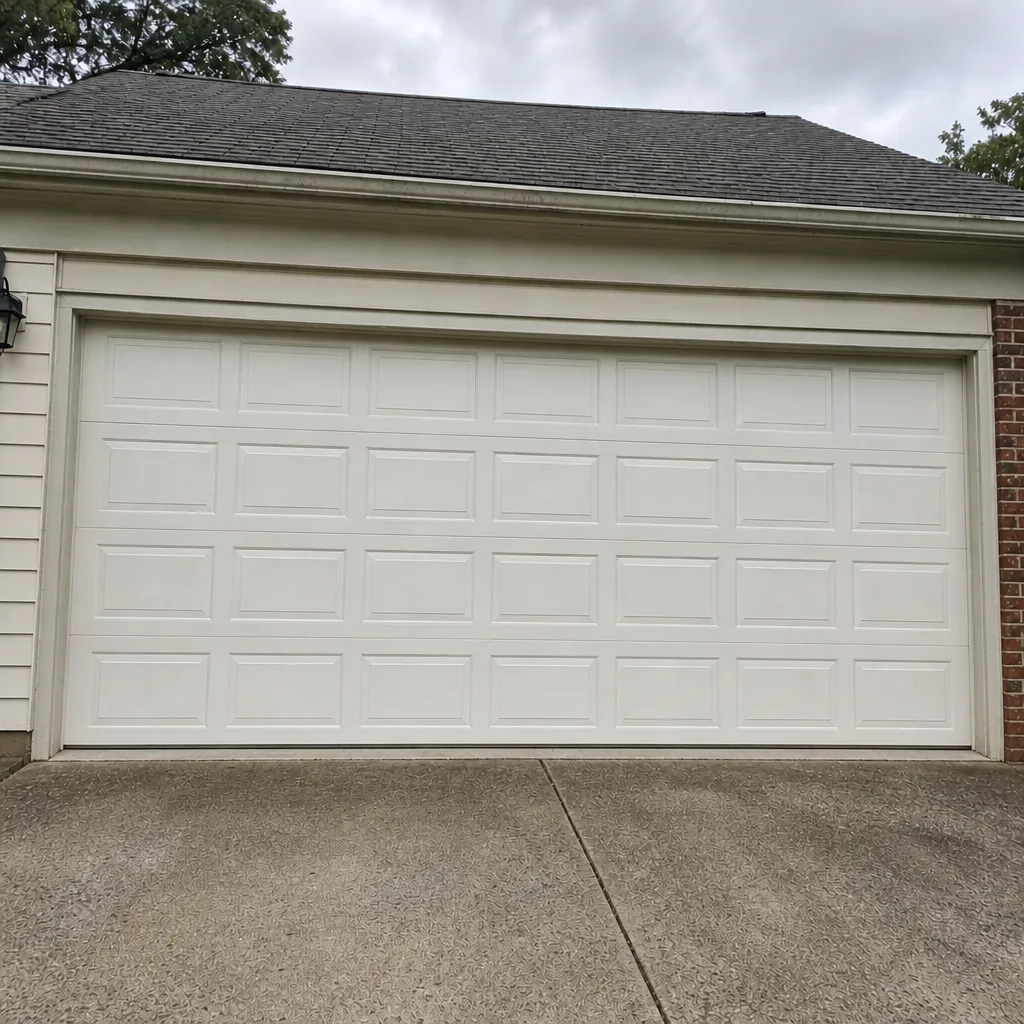 After
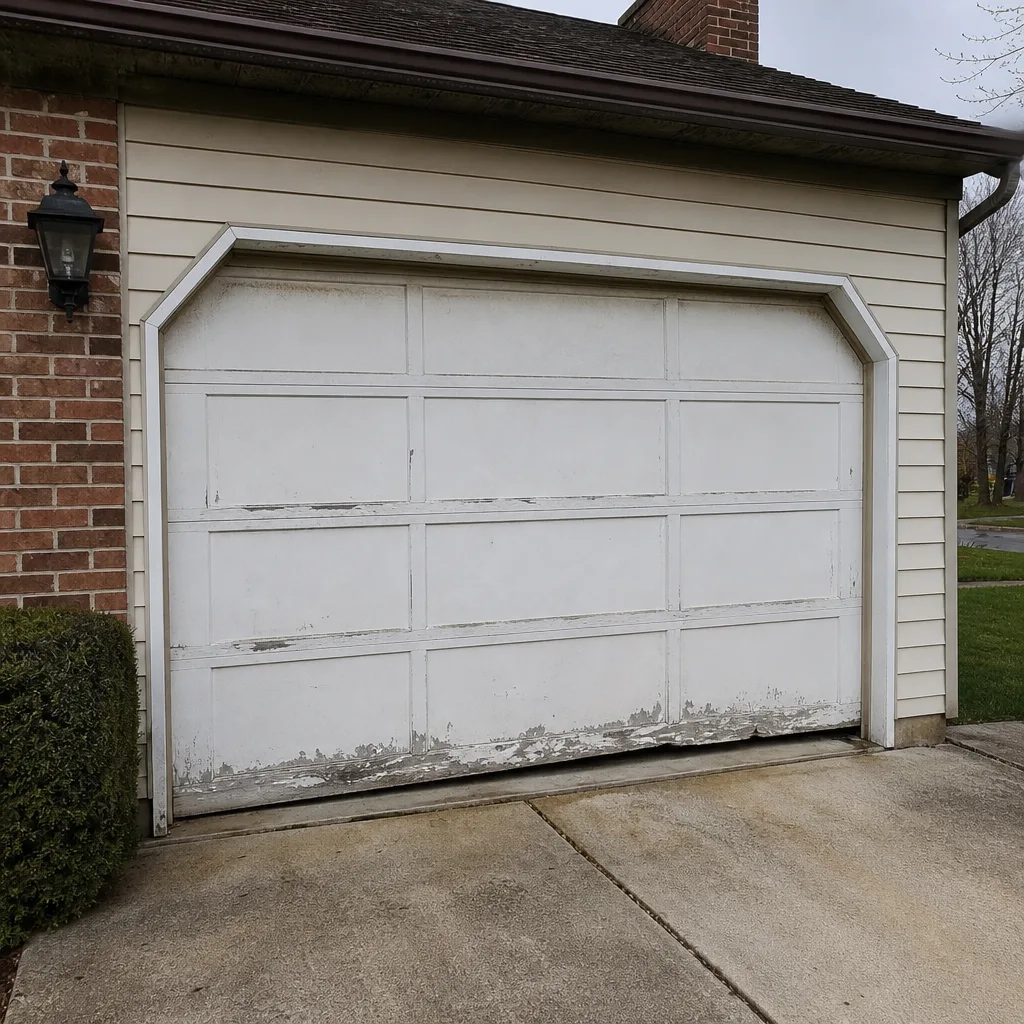 Before
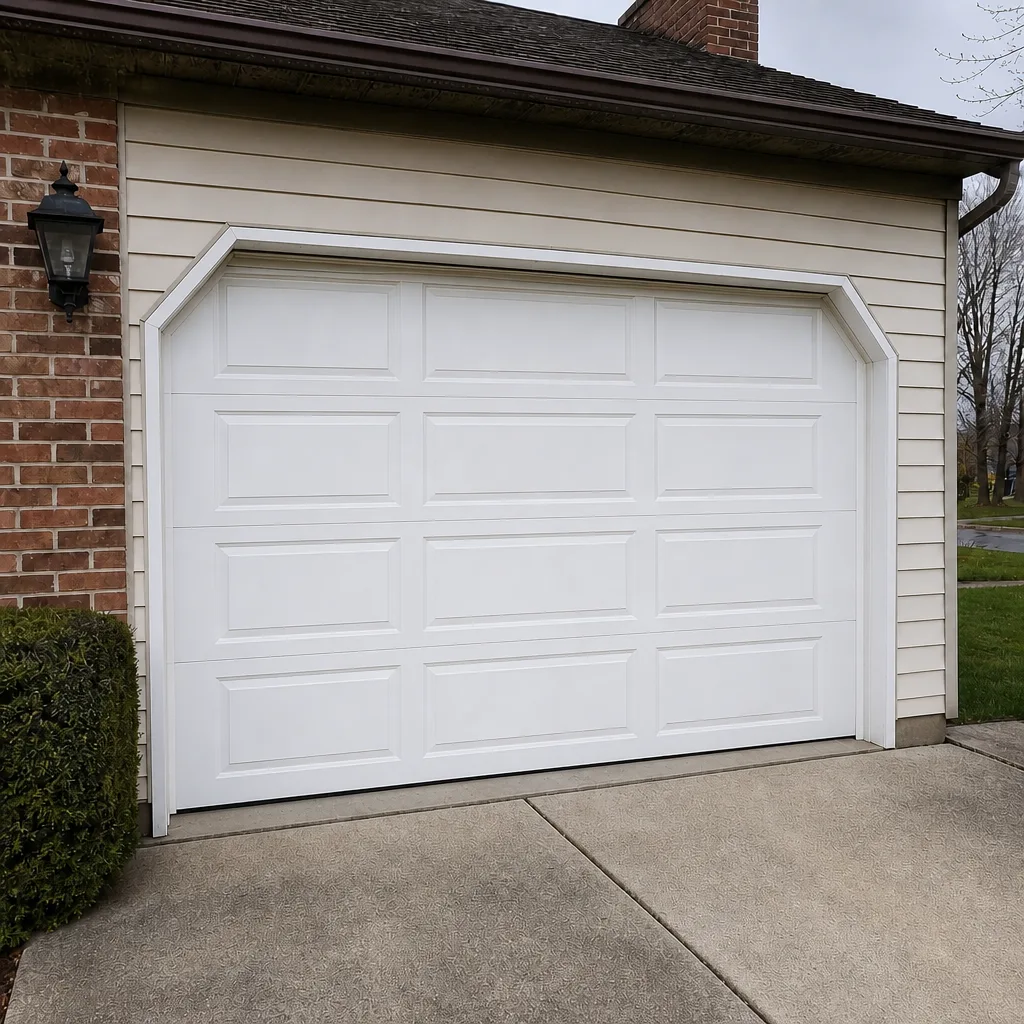 After
When to Call a Professional
A garage door is the largest moving part on your home, and it’s also one where the system as a whole matters more than any individual component. Call a professional when you’re replacing an entire door or opener, since the installation has to be measured, ordered, and scheduled; the written price is what you’ll pay. Call when a spring has failed, since springs are under extreme tension and DIY work is genuinely dangerous. Call when the door is visibly off its track, when the opener is straining, or when the door won’t reverse on the safety test. Call when you’re weighing repair against replacement on an older door, or when you’re ready to compare door options with a written estimate in hand. Sterling Garage Door Repair Pros offers free estimates in Sterling, with pricing quoted and agreed before any work starts. Call (855) 684-1720 to talk through your door, your opener, and what your garage actually needs.
Frequently Asked Questions
For most Sterling homes, Clopay and Amarr offer the widest range of insulated styles and the strongest local panel availability in Northern Virginia. That said, the “best” brand depends on your HOA restrictions, your garage’s orientation, and whether the garage is attached or detached. Start with your configuration, then compare brands. Call (855) 684-1720 for a free estimate on the options that fit your garage.
An insulated garage door matters most if your garage is attached to your home or sits under a bedroom or living space. For an attached garage, R-10 to R-16 is a reasonable range for this climate. For a detached storage garage, an insulated door is usually unnecessary. Call (855) 684-1720 to talk through which level fits your home.
24-gauge is thicker than 25-gauge, because the gauge number runs backwards. In practice, 24-gauge steel resists dents better and is the standard we recommend for most Sterling homes. 25-gauge is fine for sheltered, low-traffic garages that don’t need extra durability. Call (855) 684-1720 for a free estimate that includes a gauge recommendation for your specific driveway exposure.
No. The door brand and the opener brand are separate purchases, and they don’t need to match. What matters is that the opener’s lifting capacity matches the door’s weight and that the opener’s drive type fits your garage layout. LiftMaster, Chamberlain, Genie, and Craftsman all pair fine with the major door brands. Call (855) 684-1720 to review your current door and opener together.
Get the HOA’s written guidelines before you order, and get approval in writing before the door is installed. Confirm panel styles, window inserts, decorative hardware, and colors. Clopay and Amarr tend to offer the widest style range for HOA-specific requirements, but always check the actual rules for your subdivision. Call (855) 684-1720 for help comparing compliant options.
Usually not; panels are brand- and model-specific. Replacing one damaged panel with a panel from another brand almost never matches cleanly, and it can affect the door’s structural balance. Order the correct replacement panel for your exact door model. If you’re not sure what door is already installed, our team can identify it before ordering. Call (855) 684-1720 for a free estimate.
The Bottom Line
The garage door brand you choose matters, but less than the configuration around it: steel gauge, insulation value, spring sizing, opener capacity, and local parts availability. For most Sterling homes, a 24-gauge, moderately insulated door from a brand with strong Northern Virginia panel supply is the reliable answer, and the brand name is a distant second when deciding between them. Get your HOA rules in writing, buy a heavier door only when the springs and opener are sized to handle it, and confirm panel availability for your exact style before you order. If a spring is the issue rather than the door, that’s a professional task. Sterling Garage Door Repair Pros works on eight major brands, and the team can compare doors, openers, and spring options in one visit. For a free estimate, call (855) 684-1720.
Written by the team at Sterling Garage Door Repair Pros.